Geneva/Brasilia, August 8 Brazil has formally requested consultations at the World Trade Organization (WTO) over sweeping U.S. tariffs imposed by President Donald Trump, which the South American country says breach international trade rules and unfairly target its economy in connection with the legal troubles of former Brazilian President Jair Bolsonaro.
The 50% tariffs, which went into effect on Wednesday, impact a wide range of Brazilian exports and cover nearly 36% of goods shipped to the U.S. market — roughly 4% of Brazil’s total exports. The Brazilian foreign ministry said the move “flagrantly violated” the WTO’s most favoured nation principle and exceeded tariff ceilings agreed upon by the United States at the global trade body.
“The United States has flagrantly violated key commitments the country has agreed upon at the WTO,” the ministry said in a statement, adding that it remains open to negotiations and hopes consultations “contribute to a solution to the matter.”
Trump has tied the punitive measures directly to the judicial situation of his ally Bolsonaro, who is under house arrest in Brazil while facing charges related to alleged election interference. Last month, a court ordered the right-wing leader to wear an electronic ankle monitor and abide by a curfew during the ongoing proceedings.
The U.S. government has not issued a formal response to Brazil’s WTO request. A Brazilian government official, speaking on condition of anonymity, told The Associated Press that the legal process at the WTO could be lengthy and carries no guarantee of success.
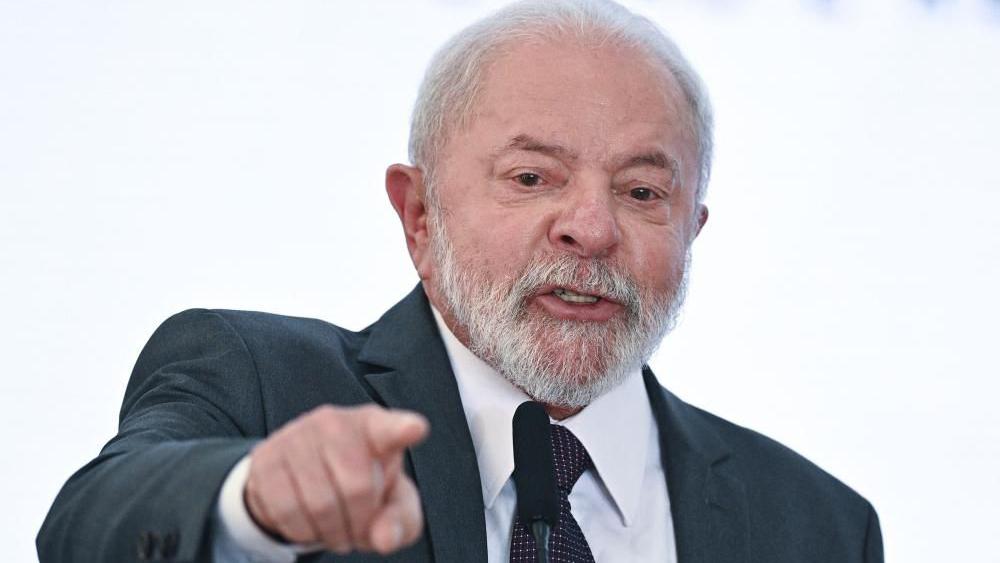
Brazilian President Luiz Inácio Lula da Silva, who has long called for reforms to strengthen the WTO’s ability to mediate trade conflicts, has declined to speak directly with Trump over the matter. “He doesn’t want to,” Lula said on Tuesday when asked about the possibility of a phone call with the U.S. president. “Maybe I’ll invite him to attend COP in Belém instead.”
If no resolution is reached during consultations, the WTO could establish a dispute settlement panel to adjudicate the case.
The most favoured nation principle, a cornerstone of the WTO framework, requires members to treat all trading partners equally in terms of tariffs and market access, barring narrowly defined exceptions.