

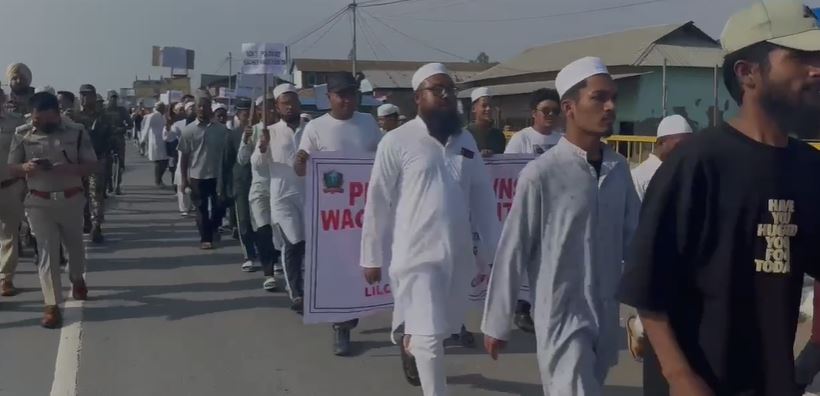
IMPHAL, India, April 9– Thousands of protesters formed human chains and held rallies in parts of Manipur’s Imphal Valley on Tuesday, voicing strong opposition to the recently amended Waqf law, which they claim threatens community rights and lacks adequate consultation.
Demonstrations were reported from key Muslim-dominated areas of Kairang, Khabeisoi and Khurai Khumidok, located within the Khurai and Heingang assembly constituencies. The largest rally took place in the Khumidok Bazar-Heikrumakhong area, where men, women and children participated in peaceful demonstrations. Protesters shouted slogans demanding the repeal of the law, with many vowing to continue democratic forms of protest until their concerns are addressed.
“The bill is unacceptable to our community. Our protests will continue until and unless it is repealed,” said Tayebur Rahman, a protester from the Khurai area. Rahman also condemned what he called a personalised attack on BJP Minority Morcha president Asker Ali.
Last week, tensions escalated in Lilong, Thoubal district, where an angry mob torched the residence of Ali, who later issued a public apology for “hurting the sentiments of the community.” Authorities imposed curfews in parts of the district to contain the unrest.
Beyond Imphal East, similar protests have been reported from Muslim pockets in Thoubal and Bishnupur districts, indicating a growing resistance to the legislation.
The Waqf Amendment Bill, passed by both houses of parliament last week after marathon debates and signed into law over the weekend, has sparked widespread criticism. It has also been challenged in the Supreme Court, with at least 15 petitions expected to be heard next week.
The federal government maintains that the law pertains to the management of Waqf properties and is not religious in nature. The BJP has stated that the legislation was drafted following consultations with various stakeholders, including non-Muslim minorities. Despite reassurances, discontent continues to mount among sections of the Muslim community in Manipur, highlighting growing tensions over the bill’s impact on religious trust properties and local autonomy.