

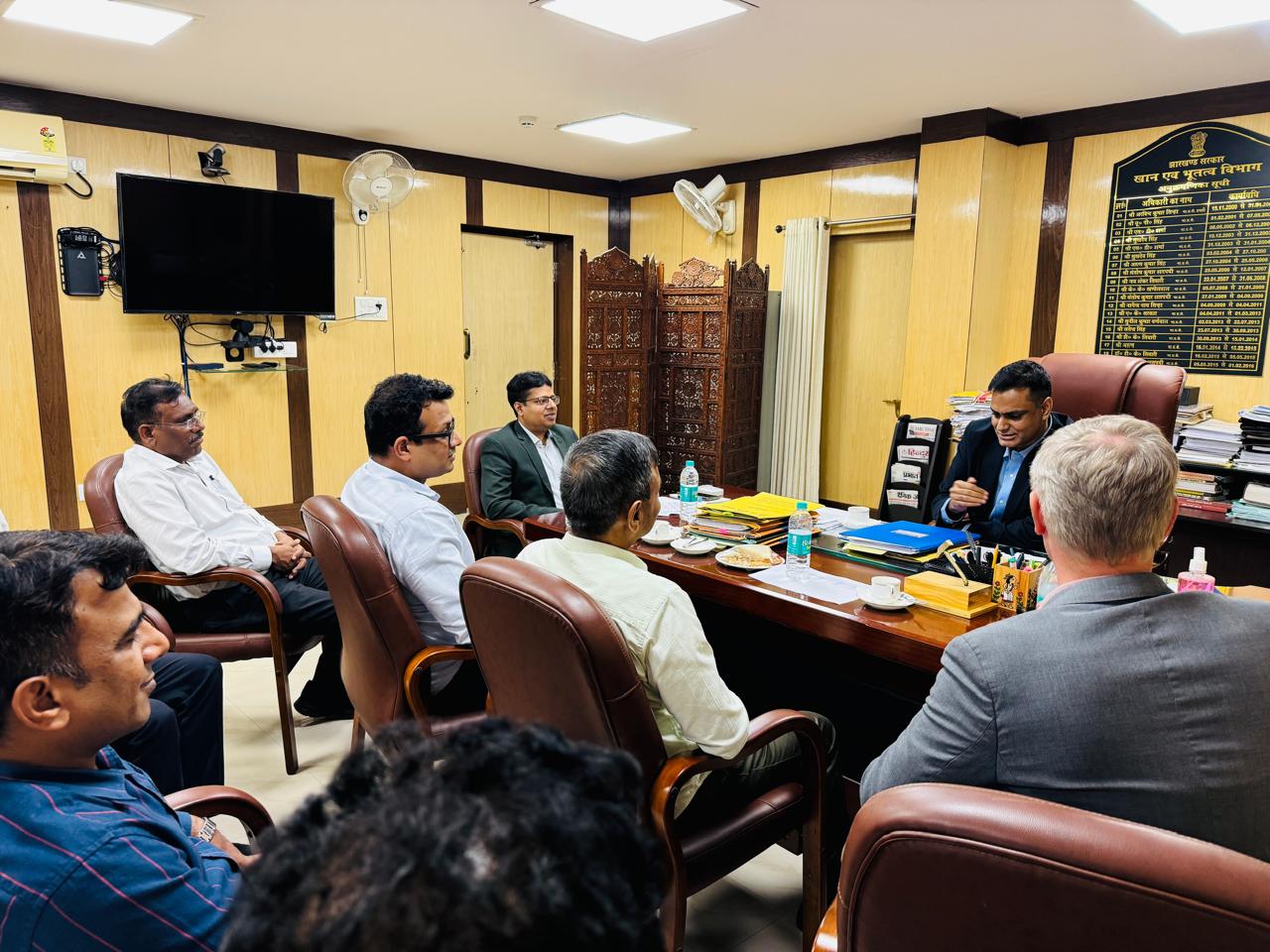
Ranchi, Sept 3: Jharkhand has selected the Giridih Open Cast Project (OCP) and Karma OCP in Ramgarh district as pilot sites for the scientific rehabilitation and sustainable repurposing of coal mines being closed, officials said.
The decision was taken at a high-level meeting in Ranchi, where it was agreed that recommendations for both mines would be sent to the Centre. The initiative is being undertaken under the Technical Cooperation on To-be-Closed Coal Mines (TCCM) project, with support from the Ministry of Coal and German development organisation GIZ.
A detailed Final Mine Closure and Repurposing Plan will be prepared for the two mines to assess possibilities for post-closure utilisation of land, water resources, infrastructure and other assets, as well as opportunities for strengthening the local economy.
The initiative seeks to move beyond conventional mine closure by transforming exhausted mining sites into environmentally safe, socially inclusive and economically productive assets.
According to the plan, closed mine land could potentially be used for renewable energy projects, tourism, agriculture, horticulture, fisheries, skill development centres and other economic activities. A detailed DPR will cover environmental restoration, land-use planning, water and mine-void management and infrastructure repurposing.
The government also plans to explore suitable locations for renewable energy projects and other investments, with the initiative expected to generate new employment and livelihood opportunities for communities in mining-affected areas.
As part of the community-focused approach, eight villages within a five-km impact zone of Karma OCP—Sugia, Marar, Bongabar, Karma, Kaitha, Kander, Lodhma and Painki—have been identified for assessment of their socio-economic conditions, vulnerable groups and livelihood opportunities. A Mine Closure Advisory Committee has also been constituted for local coordination.
The state government said it was essential to keep mining areas productive even after mineral resources had been exhausted and described the initiative as an important step towards sustainable post-mining development in Jharkhand.
“Mine closure is not limited merely to the cessation of mining activities, but transforms these sites into environmentally safe, socially inclusive and economically productive assets,” the government said.
The model, based on international experience and modern technologies, is expected to provide a framework that could subsequently be replicated in other coal-producing regions of the country.
“The model could serve as the foundation for sustainable post-mining development in the state,” the government said.
The TCCM project will continue until March 2030, with its experiences and learnings planned for application to other coal mines being closed across the country.
