

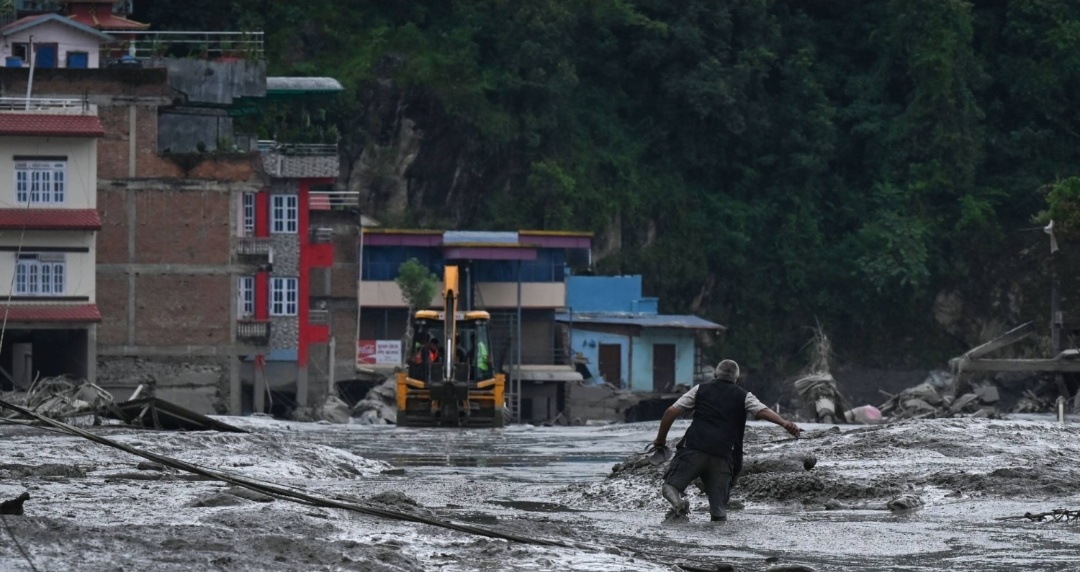
Kathmandu, Aug 27: The devastating floods in Nepal have prompted experts to examine the precise chain of events behind the disaster, with the sudden nature of the flooding raising questions about the possible role of extreme weather, landslides and glacier-related hazards.
The flooding caused extensive destruction in affected areas and highlighted the vulnerability of communities living in Nepal’s mountainous regions, where steep terrain and rapidly changing environmental conditions can amplify the impact of natural hazards.
Experts say determining the immediate trigger will require detailed analysis of weather records, river conditions, satellite imagery, geological data and other available evidence. Possible scenarios could include intense rainfall, landslides, sudden releases of water or a combination of several factors.
The disaster has also renewed attention on the changing Himalayan environment. Rising temperatures are contributing to significant changes in glaciers and frozen mountain terrain, which can alter water systems and increase the potential for hazards such as landslides and glacial lake outburst floods.
A glacial lake outburst flood occurs when water held behind a natural barrier of ice, rock or sediment is suddenly released. Such an event can send large volumes of water and debris downstream with little warning.Researchers have increasingly warned that Himalayan hazards can occur in cascading sequences.
Heavy rainfall, for instance, can trigger a landslide that blocks a river before the accumulated water eventually breaks through the obstruction, producing a sudden flood downstream.The latest disaster has also brought renewed focus to concerns surrounding cross-border disaster information between Nepal and China.
Rivers and mountain systems in the Himalayan region cross national boundaries, making timely sharing of information about rainfall, river levels, landslides and glacial lakes important for communities downstream.Nepal and China have discussed mechanisms for exchanging real-time information on floods and landslides and identifying potential glacial lake risks.
However, according to reports, a formal mechanism to implement such arrangements has yet to be established.The absence of a fully operational early-warning system has raised concerns among disaster-management stakeholders, particularly in areas where communities may have limited time to respond to sudden flooding.
At the same time, claims linking the disaster directly to dam construction or other specific infrastructure projects should be treated cautiously until supported by scientific evidence. Establishing whether any particular project contributed to the flooding would require detailed hydrological and operational data.
The disaster has underscored the need for stronger early-warning systems, improved monitoring of vulnerable mountain areas and closer coordination among countries sharing Himalayan river basins.
As authorities continue rescue and recovery efforts, experts are expected to study the event in greater detail to determine its immediate trigger and assess what lessons can be drawn to reduce the impact of similar disasters in the future.
