

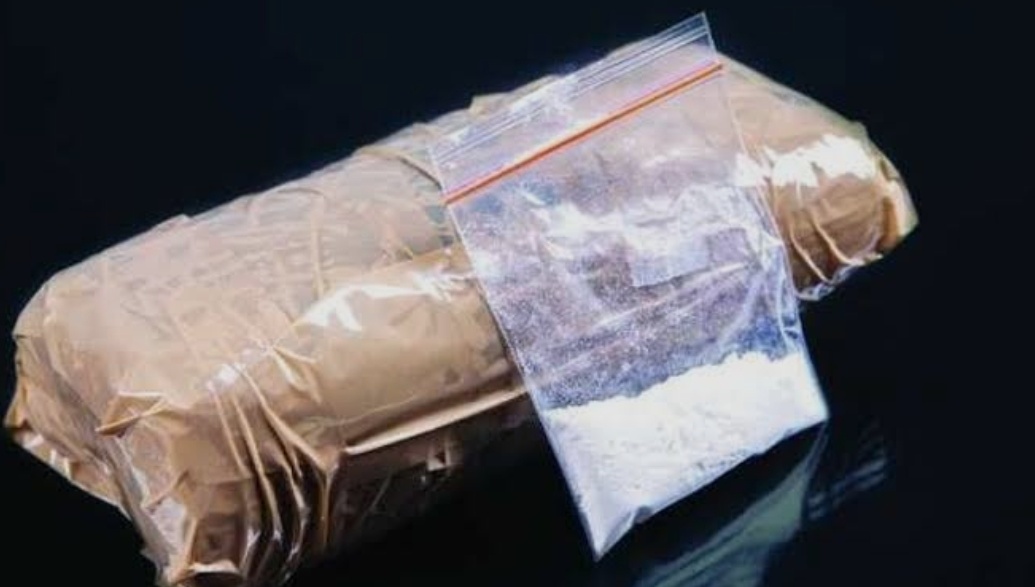
New Delhi, Aug 21: Haryana has emerged as an important transit and distribution point in the interstate narcotics network, with official data showing nearly 11,000 cases registered under the Narcotic Drugs and Psychotropic Substances Act between 2022 and 2024.The state recorded 10,948 NDPS cases during the three-year period, including 3,815 cases in 2022, 3,808 in 2023 and 3,325 in 2024.
Enforcement agencies seized more than 76,000 kg of narcotic substances during the same period.The data indicates that several districts have become key enforcement hotspots. Sirsa recorded the highest number of cases at 1,522, followed by Faridabad with 1,073.
Gurugram accounted for 712 cases, while Fatehabad and Kurukshetra recorded 684 and 669 cases respectively.
Together, the five districts accounted for 4,660 cases, or more than 42 per cent of the cases registered across Haryana during the period.Sirsa’s location in western Haryana makes it particularly significant in the context of interstate movement of narcotics.
The district recorded 624 cases in 2022, 593 in 2023 and 305 in 2024.Officials, however, caution that a decline in registered cases in a particular district cannot alone be treated as evidence of a reduction in trafficking, as criminal networks can change routes and methods to evade enforcement agencies.
Faridabad’s proximity to Delhi-NCR gives the district a different strategic significance. The district recorded 362 cases in 2022, 355 in 2023 and 356 in 2024. Gurugram, meanwhile, saw cases rise from 169 in 2022 to 267 in 2023 and 276 in 2024.
The quantity of narcotics seized in Haryana remained above 24,000 kg annually during the period. Agencies seized 24,949.364 kg in 2022, 25,557.001 kg in 2023 and 25,606.549 kg in 2024.Opium-based substances constituted a major portion of the seizures, while cannabis-based drugs also accounted for a substantial quantity.
Authorities also reported seizures involving cocaine, psychotropic substances and medicinal preparations.The enforcement strategy is increasingly focusing on dismantling trafficking networks rather than limiting operations to individual seizures, officials said.
Agencies are examining supply chains, routes, entry and exit points and links between organised groups.Interstate coordination has also been strengthened, with agencies from Haryana and neighbouring regions sharing intelligence and mapping narcotics hotspots under the Narco Coordination Centre mechanism.
Authorities have additionally intensified efforts to target the financial assets of suspected drug networks. In Haryana, assets worth Rs 14.33 crore were frozen or seized in 98 cases during 2025, while assets worth another Rs 6.54 crore were frozen or seized in 40 cases up to May 2026.
The state is also using provisions of the Prevention of Illicit Traffic in Narcotic Drugs and Psychotropic Substances Act against habitual offenders. Detention orders were issued against 75 such offenders in 2025 and 10 more up to June 2026.
Officials are using digital platforms, including the NCORD Portal and NIDAAN database, to improve information-sharing and track people arrested in narcotics-related cases.The coordinated approach reflects an effort to disrupt drug networks across state boundaries by combining enforcement operations, intelligence-sharing, financial investigations and monitoring of repeat offenders.
