

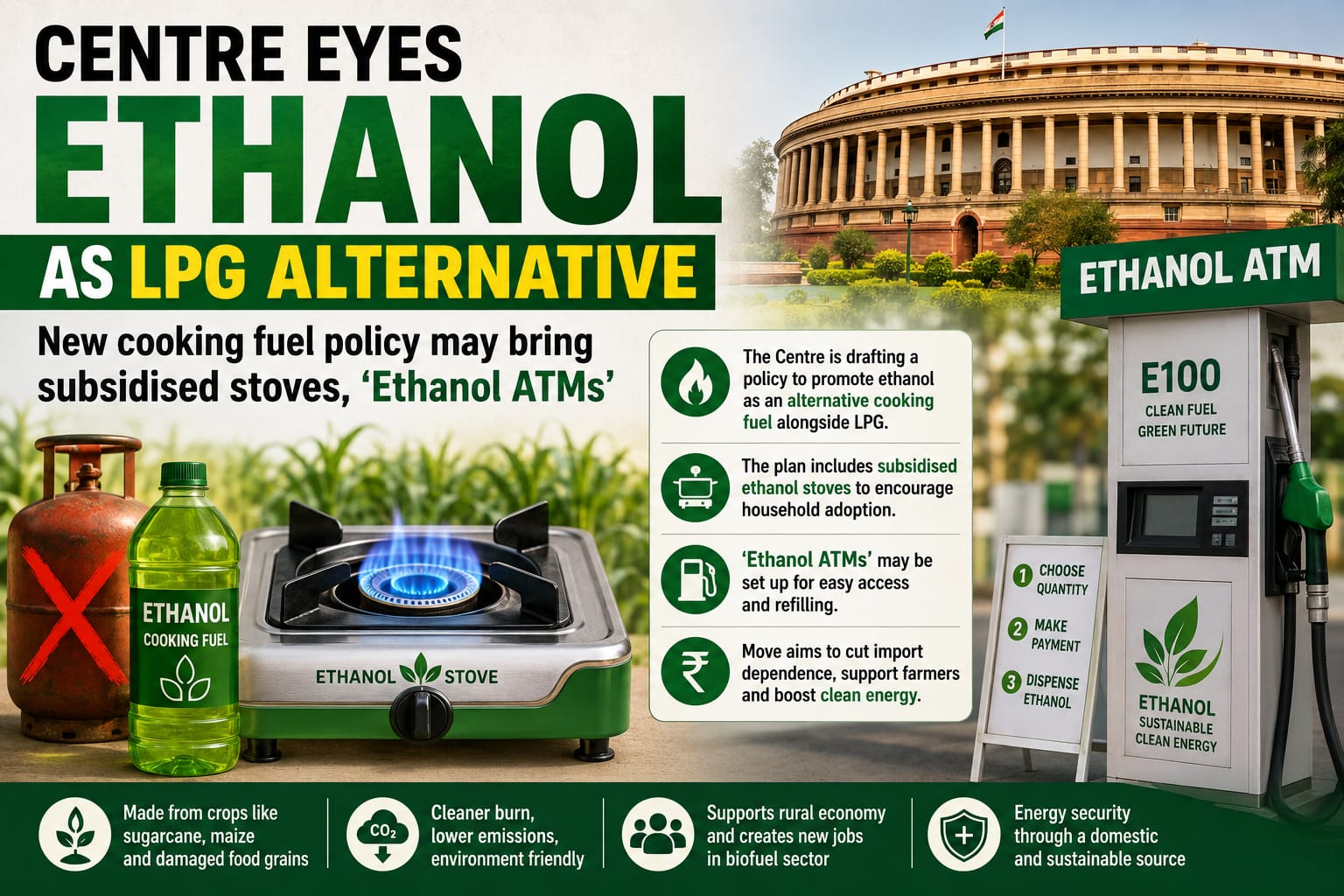
New Delhi, July 21: The Centre is preparing a new policy to promote ethanol as an alternative domestic cooking fuel alongside liquefied petroleum gas (LPG), in a move aimed at strengthening energy security, reducing import dependence and expanding the use of cleaner fuels.
The Ministry of Petroleum and Natural Gas is currently holding consultations with industry bodies and oil marketing companies before finalising the policy, which is expected to be ready by September.
According to the proposal under discussion, the government plans to encourage the adoption of ethanol-based cooking stoves, develop a dedicated supply chain and offer subsidies or financial incentives to consumers to reduce the initial cost of switching to the new fuel.
The policy also proposes the establishment of “ethanol ATMs” at petrol pumps and retail outlets, where consumers would be able to purchase ethanol for use in specially designed household stoves.
“Subsidies or financial incentives may be provided to consumers for purchasing ethanol-based stoves,” according to the proposed policy framework.
It further proposes that “companies may be allowed to install ‘ethanol ATMs’ at petrol pumps and retail outlets to supply ethanol for domestic cooking.”
The initiative comes at a time when India’s ethanol production capacity has expanded significantly. The country currently has an annual production capacity of more than 20 billion litres, with an additional around 4 billion litres expected to be added during the current financial year. However, officials believe a substantial portion of this capacity remains underutilised.
The government is therefore exploring the possibility of using surplus ethanol as a household cooking fuel, alongside its existing use in petrol blending.
Officials believe the move could also help reduce India’s dependence on imported LPG, particularly amid global supply uncertainties and geopolitical tensions affecting energy markets.
According to the government’s proposal, “using surplus ethanol as a domestic cooking fuel could help reduce dependence on LPG imports while promoting clean energy.”
If approved, the policy is expected to support the government’s broader objectives of enhancing energy security, promoting cleaner fuels, and creating an additional domestic market for ethanol produced in the country.
