

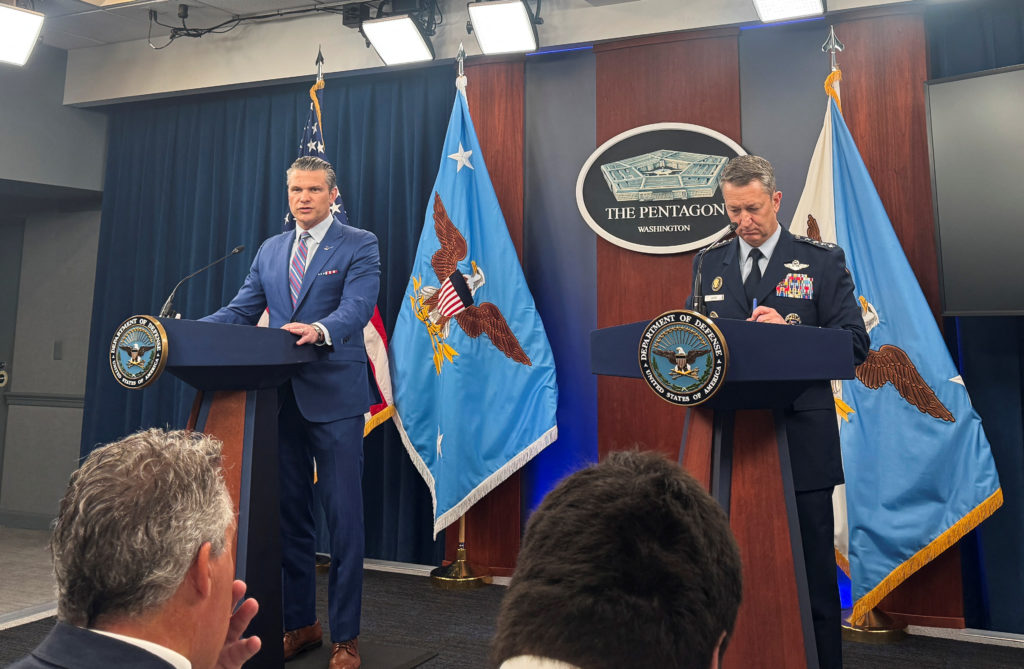
Washington, Mar 31: US Defense Secretary Pete Hegseth on Tuesday said the coming days in the Iran conflict would be “decisive”, as Washington signalled its push for a rapid military conclusion while tensions in West Asia continued to escalate.
Speaking after a visit to troops in CENTCOM’s area of responsibility, Hegseth said American forces involved in Operation Epic Fury were focused on “finishing the mission” and achieving a swift victory, unlike the prolonged wars in Iraq and Afghanistan.
He said troops on the ground displayed a sense of urgency and determination, with soldiers seeking “more bombs, bigger bombs and more targets” rather than asking for withdrawal or rotation. According to Hegseth, the current operation has a clear end goal and is aimed at a decisive outcome.
In a striking example of battlefield resolve, Hegseth said three Air Force captains who survived a March 2 friendly fire incident involving Kuwaiti air defences refused to return home and instead remained in theatre, later leading retaliatory airstrikes over Tehran within 24 hours.
A crew chief accompanying the operation described the conflict as “long overdue”, while Hegseth said no soldier had requested to be sent back, underscoring what he called strong morale among US forces.
At the Pentagon briefing, Hegseth said diplomacy remained Washington’s primary effort but warned that the United States would “negotiate with bombs” if required. He also did not rule out the possibility of deploying ground troops.
The remarks came amid a deepening crisis in the Strait of Hormuz, through which nearly one-fifth of the world’s oil exports pass. President Donald Trump reportedly urged allied countries to reopen the strategic waterway themselves as Iran tightened control over the route.
The intensifying conflict has already impacted global energy markets, with average US gasoline prices rising above USD 4 per gallon for the first time since 2022 amid fears of supply disruption.
Fighting continued on Tuesday with airstrikes reported in Tehran, an Iranian drone attack setting a Kuwaiti oil tanker ablaze, and threats by the Islamic Revolutionary Guard Corps to target US companies in the region.
The latest developments have heightened concerns of a wider regional conflict and renewed volatility in global oil markets, analysts said.
