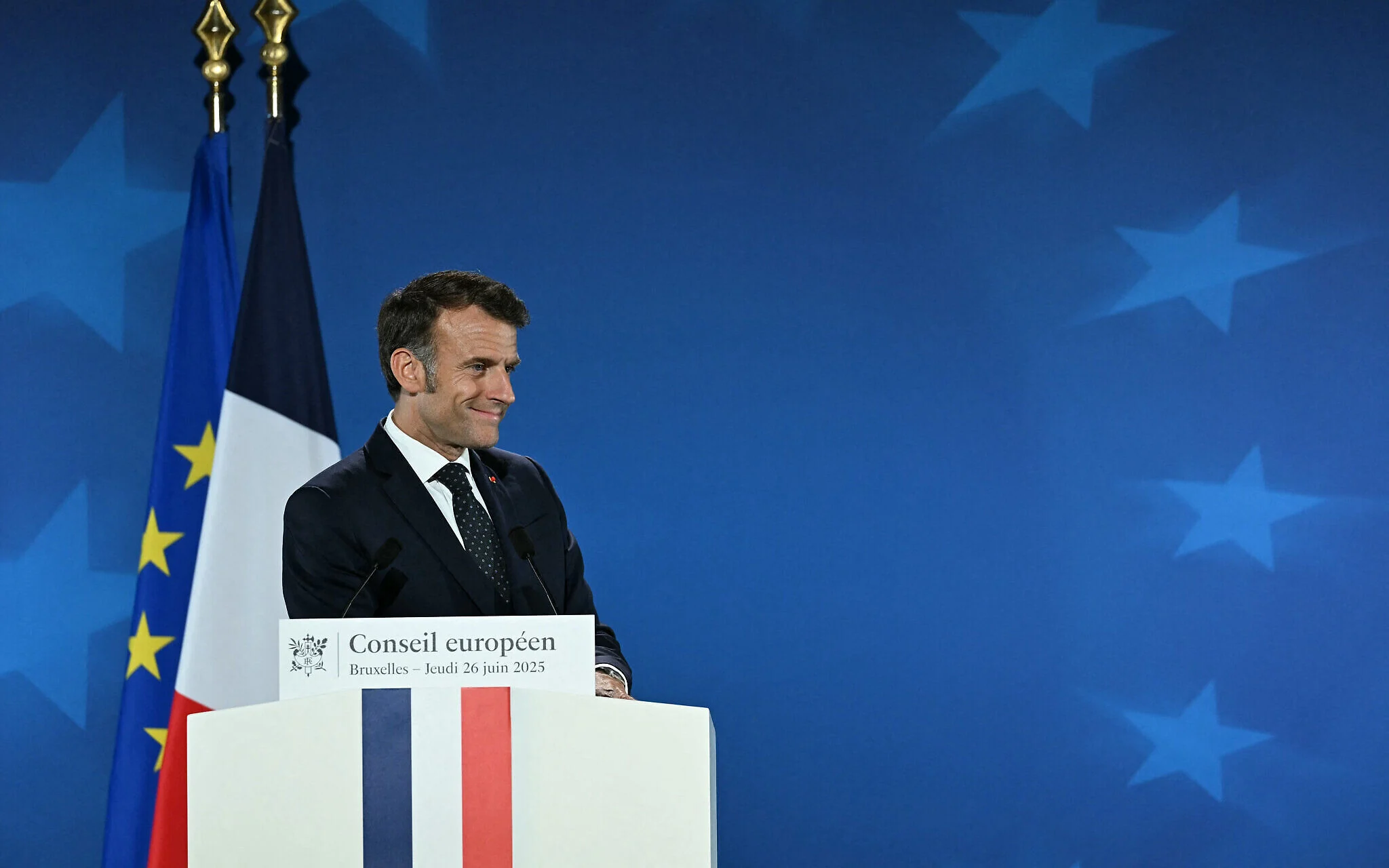
Brussels, June 28: French President Emmanuel Macron warned on Thursday that Iran’s potential withdrawal from the global nuclear Non-Proliferation Treaty (NPT) would be the “worst-case scenario” following U.S. strikes on Iranian nuclear sites, calling for urgent diplomatic engagement to prevent further escalation.
Speaking to reporters after an EU summit in Brussels, Macron said the United States’ recent military action against Iran’s nuclear facilities had been “genuinely effective,” but cautioned that Tehran’s exit from the treaty could lead to a dangerous erosion of global non-proliferation norms.
“The worst would be that the consequence of this is Iran’s exit from the Non-Proliferation Treaty and therefore, ultimately, a drift and a collective weakening,” Macron said.
To preserve the treaty, which is intended to limit the spread of nuclear weapons, Macron said he would hold discussions with all five permanent members of the United Nations Security Council in the coming days. He has already spoken with U.S. President Donald Trump, informing him of recent French contacts with Iranian officials.
“Our hope is that there will be a real convergence of views,” Macron said. “The aim is that there should be no resumption of nuclear buildup by Iran.”
Iran, which ratified the NPT in 1970, has long been obligated to declare its nuclear materials to the International Atomic Energy Agency (IAEA). However, in the wake of the U.S. strikes, Iranian officials have accused the IAEA of bias, alleging it is acting as a “partner” in Israel’s “war of aggression,” and have hinted at a possible withdrawal from the treaty.
Last weekend, U.S. B-2 stealth bombers struck two Iranian nuclear facilities using GBU-57 bunker-buster bombs, while a guided missile submarine launched Tomahawk cruise missiles at a third site. President Trump hailed the strikes as a “spectacular military success,” saying they had “obliterated” key elements of Iran’s nuclear infrastructure.
However, a preliminary U.S. intelligence assessment reported by American media indicated that the strikes may have only delayed Iran’s nuclear program by several months. The assessment drew criticism from U.S. Defense Secretary Pete Hegseth and other officials, who defended the effectiveness of the operation.
The developments have raised fears of renewed nuclear proliferation in the region and underscored the fragility of existing arms control agreements amid heightened tensions between Washington and Tehran.