

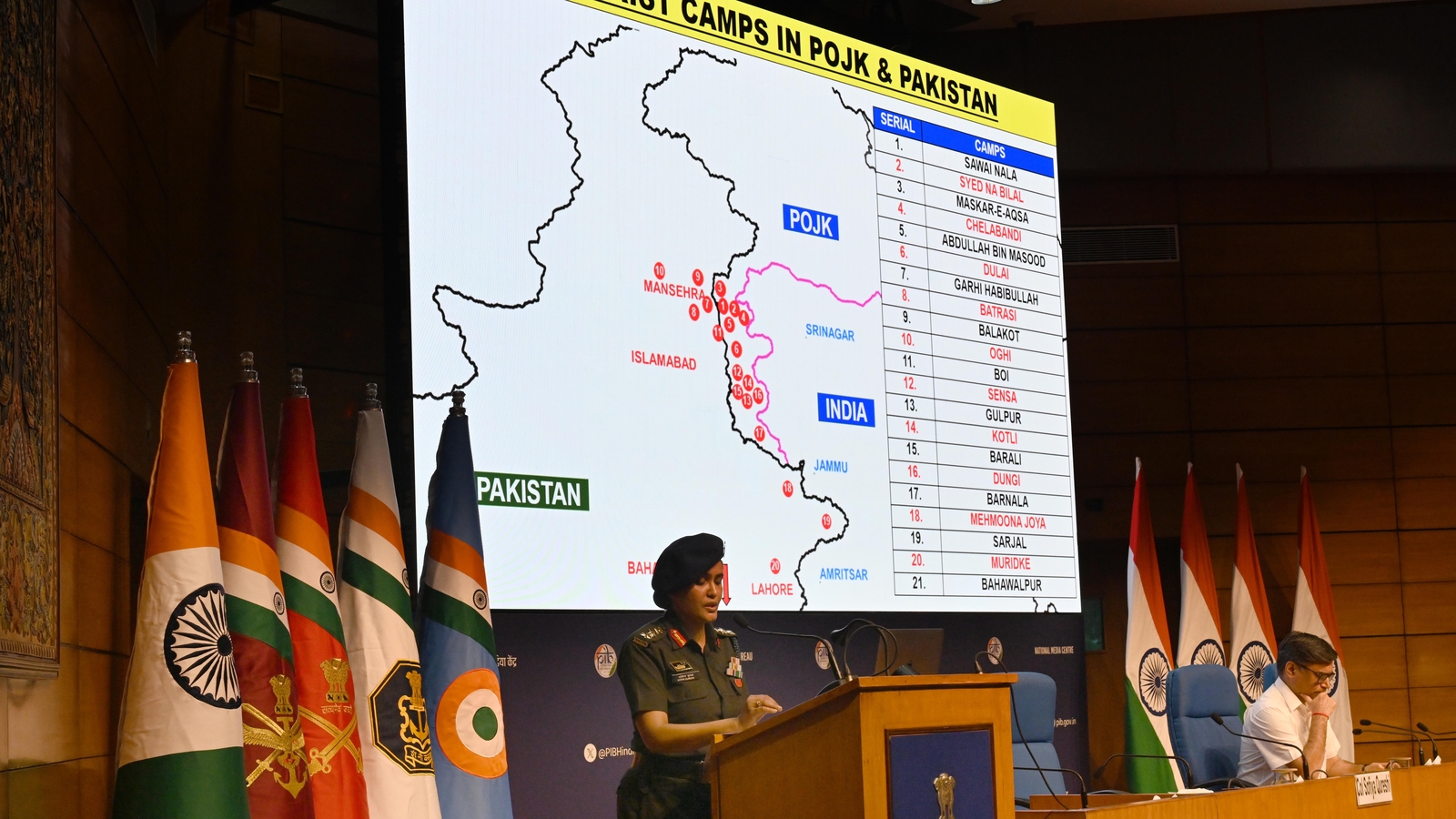
New Delhi, May 17 – India leveraged advanced artificial intelligence (AI) technologies and integrated command systems during a four-day military conflict with Pakistan earlier this month, enabling it to thwart aerial attacks and strike strategic military targets, defence sources said.
The conflict, which began on the night of May 6, saw India deploy a suite of AI-powered platforms to detect and intercept hostile objects in real time, forming an impenetrable air defence shield across land, sea, and air.
“From detecting radar images of incoming threats to coordinating responses across multiple domains, AI-based integrated command and control systems played a critical role,” a defence official told Reuters. India’s cloud-based Integrated Air Command and Control System (IACCS) was at the heart of the effort, processing data from air defence assets to deliver real-time situational awareness, sources said.
India’s use of AI in national security has been steadily evolving since 2018, when the Ministry of Defence (MoD) set up a multi-stakeholder task force on AI’s strategic implications. This led to the formation of the Defence AI Council (DAIC) and the Defence AI Project Agency (DAIPA), responsible for enabling AI adoption in the armed forces.
As of 2022, India had approved 129 AI-focused defence projects, of which 77 have been completed. Each military branch was allocated ₹100 crore (about $12 million) to fund AI integration.
Public sector firm Bharat Electronics Limited (BEL) developed AI systems to detect and classify enemy aircraft, now integrated with IACCS. The Indian Air Force’s IACCS itself, also developed by BEL, merges data from radar and surveillance systems to support decision-making during air operations.
The Indian Army has similarly deployed an AI-based Intercept Management System (IMS) for use in the Western Theatre. The platform automates interception analysis and generates actionable intelligence using data science tools.
Additionally, the Defence Research & Development Organisation’s Centre for Artificial Intelligence & Robotics (CAIR) has created an Air Defence Control and Reporting System to coordinate responses against aerial threats through effective weapon system integration.
The systems proved decisive in intercepting Pakistani aerial incursions during the conflict and in executing deep precision strikes on Pakistani military infrastructure, officials said. India’s expanding use of AI in the defence sector underscores a growing shift towards technologically driven warfare, enabling faster, more accurate threat detection and response amid rising regional tensions.