

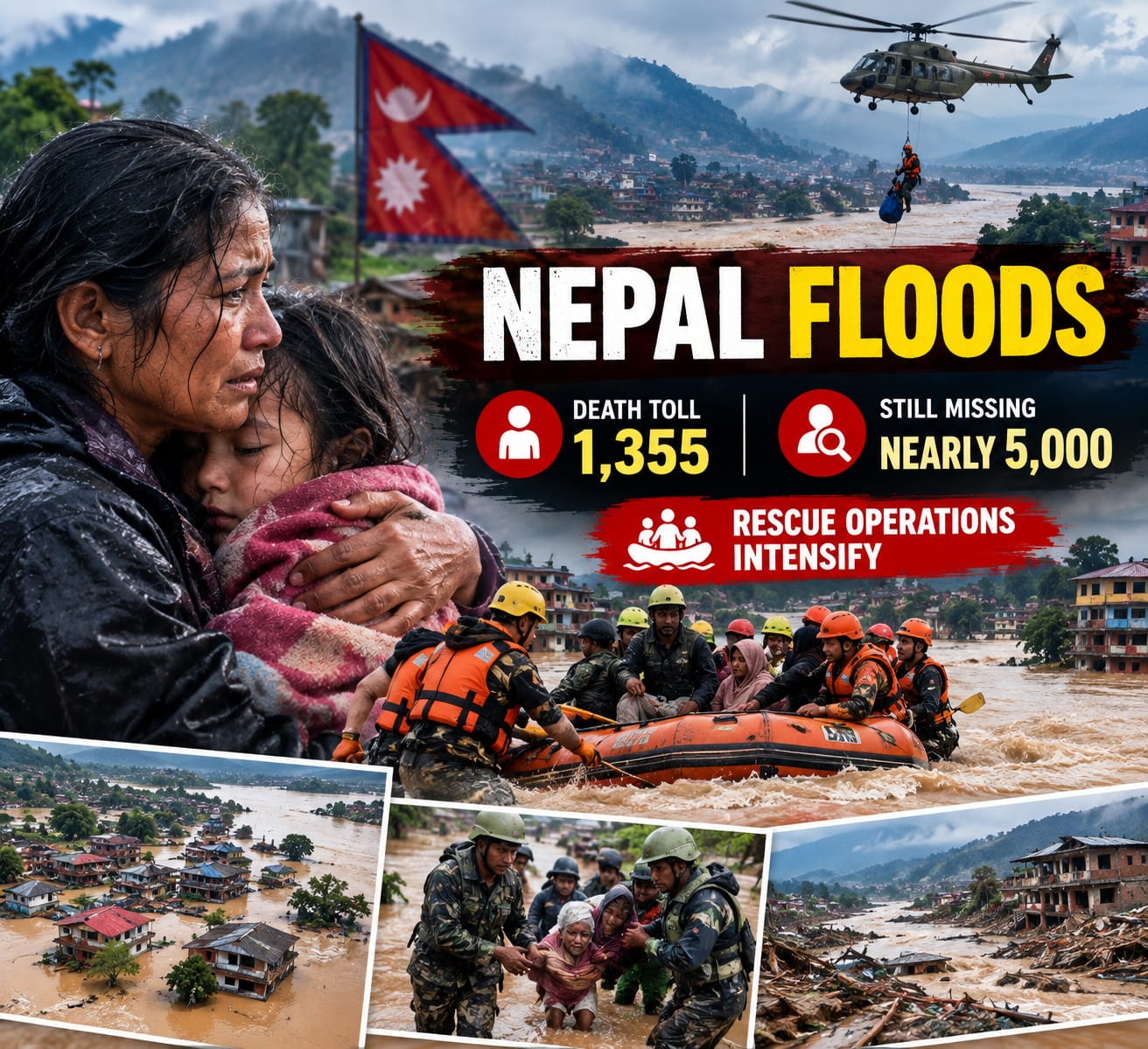
Kathmandu, Sept 7: The death toll from the devastating flash floods in Nepal has risen to 1,355, with rescue teams continuing to recover bodies and search for nearly 5,000 people still missing, authorities said on Monday.
According to the National Disaster Risk Reduction and Management Authority (NDRRMA), as many as 4,996 people remain missing, including at least 589 foreign nationals. A total of 13,396 people have been rescued so far, it said.
The highest number of casualties has been reported from Chitwan, where 363 bodies have been recovered, followed by Nawalparasi East with 222, Nawalparasi West with 221 and Nuwakot with 197, according to the disaster management authority.
Another 169 bodies were recovered from Rasuwa, while Gorkha reported 75 deaths, Dhading 70 and Tanahu 38, the NDRRMA said.
The joint command of Nepal’s security forces is continuing search and rescue operations in the worst-affected areas as authorities race against time to locate those still missing.
A major focus of the rescue efforts is the flood-hit hydropower sector, where hundreds of workers are believed to be trapped inside tunnels. Specialised teams are conducting operations at several hydropower projects, with experts from India and China assisting their Nepali counterparts.
The disaster was triggered by an ice-rock avalanche near the Nepal-Tibet border on August 26, which unleashed massive flash floods across parts of northern and central Nepal.
The Bhotekoshi River, flowing south from the Himalayan border region, carried the floodwaters downstream, causing widespread destruction. Homes, vehicles, roads and bridges were swept away, while several hydropower projects were damaged.
The scale of the disaster has also extended across the border into China. At least 21 people were killed on the Chinese side, while more than 500 people remain missing in Tibet, according to Chinese media reports.
With thousands still unaccounted for, rescue teams backed by domestic security forces and international experts continue to search through damaged infrastructure and debris for survivors and victims.
The NDRRMA said the joint command of the security forces remains actively engaged in search and rescue operations across the affected areas, while efforts at hydropower projects are being carried out on a priority basis.
