

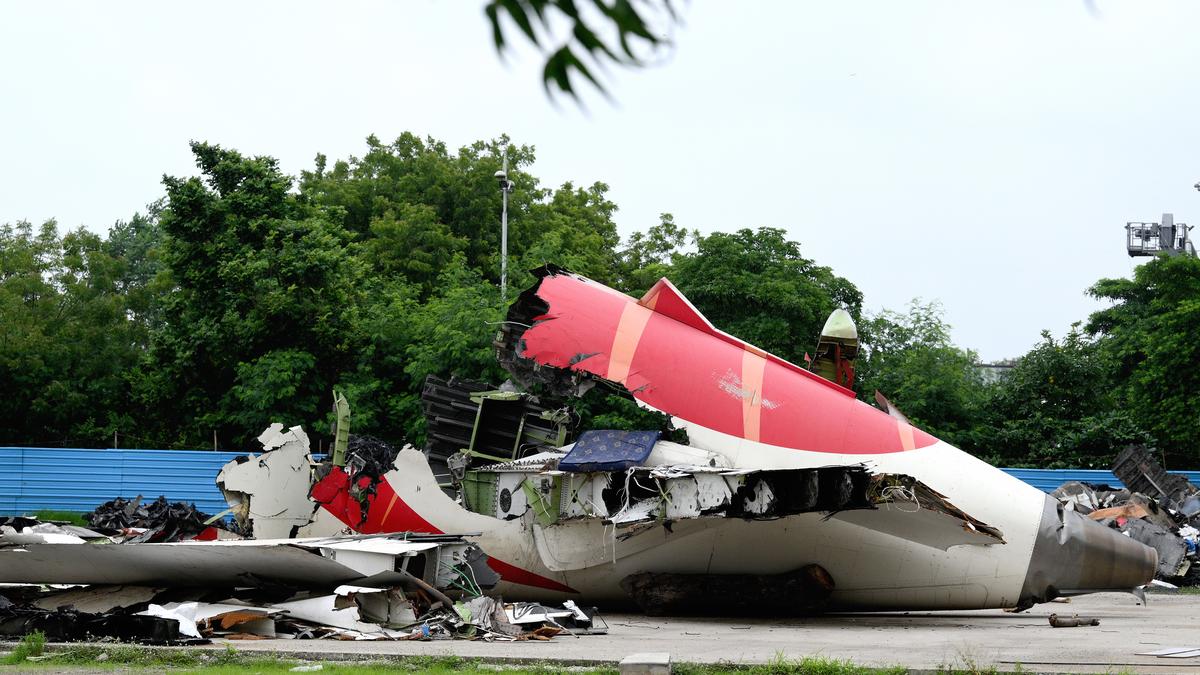
New Delhi/Washington, July 20: The chair of the U.S. National Transportation Safety Board (NTSB), Jennifer Homendy, on Friday described recent media coverage of the deadly Air India crash as speculative and premature, urging patience as the international investigation proceeds.
Her comments came amid mounting scrutiny over the June 12 crash of an Air India Boeing Dreamliner, which killed 260 people. A preliminary report released last week by India’s Aircraft Accident Investigation Bureau (AAIB) indicated confusion in the cockpit and raised questions about the location and handling of engine fuel cutoff switches.
“Investigations of this magnitude take time,” Homendy said in a statement, adding that the NTSB would continue to support the AAIB’s ongoing probe into the incident.
Several U.S. media outlets had suggested the possibility that the aircraft’s fuel control switches were turned off mid-flight, a claim not confirmed by Indian investigators. Neither GE Aerospace, Boeing, Air India, India’s Directorate General of Civil Aviation (DGCA), nor the AAIB responded to requests for comment.
On Thursday, the AAIB issued a public advisory, cautioning against “selective and unverified reporting” by some international outlets in the aftermath of the crash. The bureau, under India’s Ministry of Civil Aviation, reaffirmed that the investigation was being conducted in a “rigorous and professional manner” in line with national rules and international protocols.
“The high-profile nature of this tragedy has drawn public attention and shock,” the AAIB said. “However, this is not the time to create public anxiety or angst towards the safety of the Indian aviation industry, particularly on the basis of unfounded facts.”
The agency urged the media to exercise sensitivity toward the families of the deceased, including passengers, crew, and individuals killed on the ground.
“It is essential to respect the sensitivity of the loss,” the AAIB said. “Premature narratives risk undermining the integrity of the investigative process.”
The bureau clarified that its preliminary report is meant only to outline what happened, not why it happened, and that definitive conclusions will be drawn only in the final report, which will include root cause analysis and safety recommendations.