

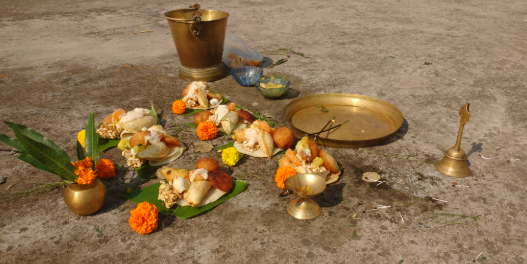
Bhubaneswar, Dec 30: Samba Dashami, a festival unique to Odisha, was observed across the state on Tuesday with devotion and traditional rituals, as thousands of devotees gathered at homes and major pilgrimage centres to offer prayers to Lord Surya, the Sun God.
The festival falls on the 10th day of the Shukla Paksha of the Pausa month and holds special significance for women, particularly mothers, who observe the day seeking good health, longevity and protection for their children.
From early morning, households across Odisha performed Surya Puja, offering arghya to the rising sun. Women carried out rituals that included viewing the Sun God through turmeric-infused water, making individual offerings for each child in the family, and preparing traditional Odia delicacies such as manda pitha, kakara pitha and arisha pitha as part of the bhoga.
After completing the rituals, devotees read or listened to the Samba Dashami Brata Katha, praying for the well-being of family members and freedom from illness.
Large gatherings were witnessed at Chandrabhaga near the Konark Sun Temple in Puri district, where thousands of devotees and tourists assembled to witness the sunrise and participate in age-old ceremonies. Many pilgrims took a holy dip in the Chandrabhaga river before offering prayers to the Sun God.
The ceremonial Surya Rath Yatra was held from the Ananta Abadhuta Mutt to Chandrabhaga, with devotees pulling the chariot amid chants and rituals. The chariot will remain at Chandrabhaga for 27 days, during which worship of the 27 nakshatras will be performed. The Bahuda Yatra is scheduled on Magha Saptami.
In Puri, devotees faced delays in darshan due to dense fog in the early hours. At the Ananta Abadhuta Mutt, the Chalanti Pratima of Lord Surya was placed on the chariot following the Pahandi ritual. As part of the offerings, 108 pieces of bara and kakara were presented to the deity before the procession moved towards Chandrabhaga.
According to mythology, Samba, the son of Lord Krishna, was afflicted with leprosy during the Dwapara Yuga due to a curse. On the advice of Lord Krishna, he undertook severe penance and worshipped the Sun God on the banks of the Chandrabhaga river near present-day Konark. After 12 years of devotion, he was cured, leading to the observance of Samba Dashami.
The president of the Soura Brahman Parishad said all rituals, including the Maha Snana, Pahandi and chariot-pulling ceremonies, were conducted as per tradition. “After the worship of the 27 nakshatras over 27 days, the Lord will take a ceremonial bath at the Chandrabhaga Tirtha and return to the Ananta Abadhuta Mutt on Magha Saptami,” he said.
Beyond its religious importance, Samba Dashami is also seen as a cultural expression of reverence for the Sun as the source of energy and life, reinforcing gratitude towards nature and its life-sustaining forces.
