

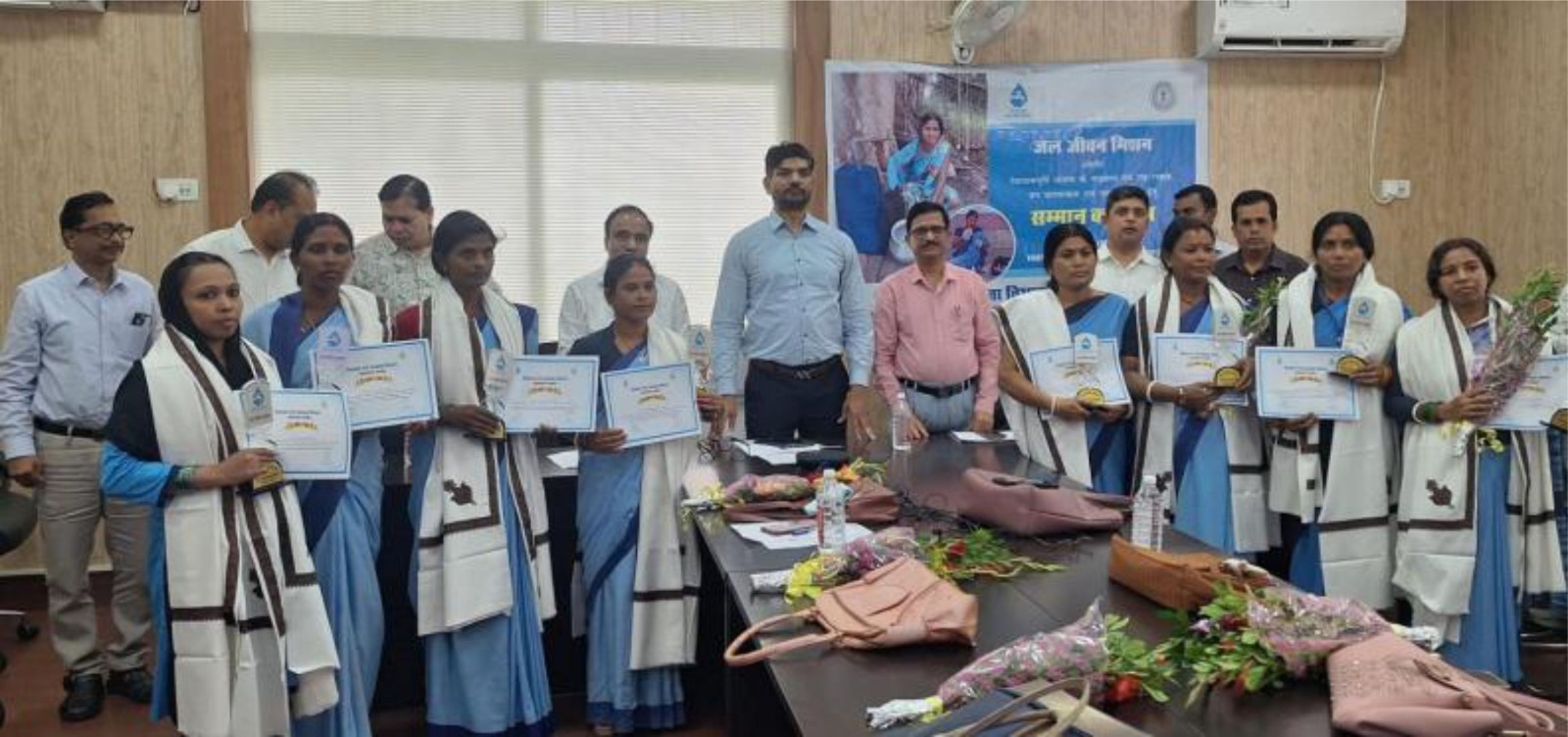
Ranchi, September 9: The Jharkhand Drinking Water and Sanitation Department has recognised the contribution of eight Jal Sahiyas for their work in improving the functioning and maintenance of rural drinking-water supply schemes under the Jal Jeevan Mission.
The awards were presented by Drinking Water and Sanitation Department Secretary Abu Imran at a programme held at Nepal House in Ranchi.
The eight women workers, including five from Bokaro district and three from Ranchi district, were presented with certificates of appreciation, mementoes and angavastrams in recognition of their work at the grassroots level.
According to the department, the awardees have worked closely with Village Water and Sanitation Committees (VWSCs) and local communities to ensure better operation and maintenance of drinking-water schemes in their respective villages and panchayats.
Their responsibilities include identifying and reporting problems in water-supply systems, promoting safe drinking water practices and creating awareness about water conservation and responsible use of water.
The Jal Sahiyas also play an important role in encouraging rural households to pay monthly water-user charges. The funds collected through these charges are utilised for the upkeep of local water-supply schemes, including payment of plumbers and pump operators and meeting repair and maintenance requirements.
The department said the recognition is aimed at highlighting the importance of grassroots workers in ensuring the sustainability of rural water services.
The Jal Jeevan Mission seeks to provide rural households with regular, adequate and safe drinking water through functional tap-water connections. Officials stressed that maintaining the infrastructure and ensuring community participation are essential for the long-term success of the programme.
The recognition of the eight Jal Sahiyas is expected to encourage other field workers and rural communities to actively participate in the operation, maintenance and sustainable management of village water-supply systems.
