

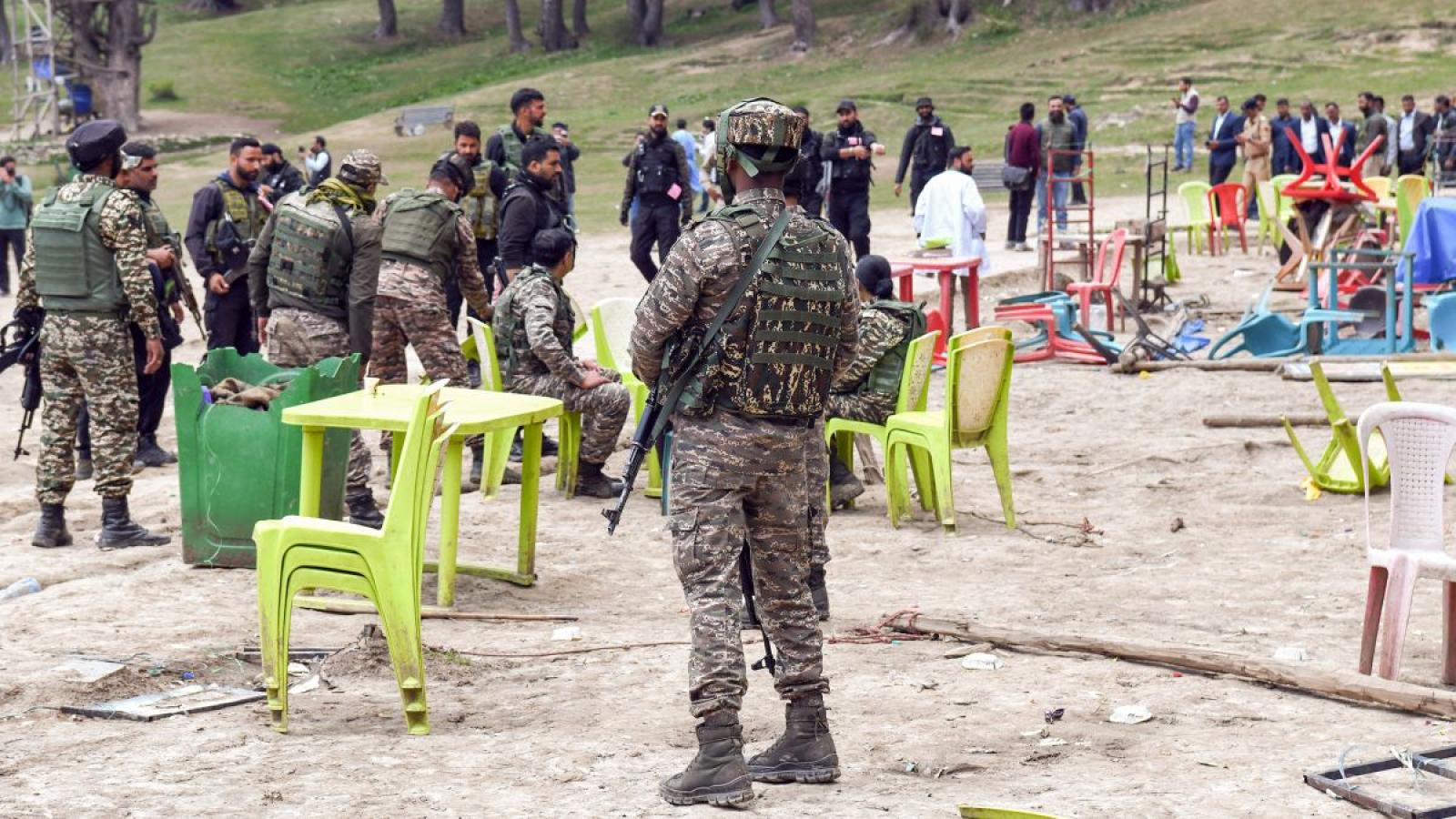
New Delhi, Dec 16: India’s National Investigation Agency (NIA) has filed its first formal charges in connection with the April 22 attack on tourists in the Pahalgam area of Indian-administered Kashmir that left 26 people dead, most of them Hindu visitors.
According to an official statement, the 1,597-page chargesheet was submitted before a special court in the Jammu region following an eight-month investigation into the incident.
The NIA has charged Pakistan-based militant group Lashkar-e-Taiba (LeT) and its offshoot, The Resistance Front (TRF), accusing them of planning, facilitating and carrying out the assault. Both organisations have been accused of waging war against India.
Six individuals have been named in the case. Three Pakistani militants — Faisal Jatt alias Suleman Shah, Habeeb Tahir alias Jibran, and Hamza Afghani — were charged posthumously after being killed in encounters with Indian security forces. Two local residents, Parvaiz Ahmad and Bashir Ahmad Jothatd, who were arrested earlier this year, have been charged for allegedly providing shelter and logistical support to the attackers.
The agency also charged a man identified as Sajid Jatt, described as a Pakistani militant handler, though his current whereabouts were not disclosed.
In its findings, the NIA said it had traced the conspiracy behind the attack to Pakistan. New Delhi has repeatedly accused Islamabad of backing militant violence in Kashmir, allegations that Pakistan has denied.
The United States has previously described TRF as a front and proxy of Lashkar-e-Taiba, a UN-designated terrorist organisation based in Pakistan.
The April attack triggered a sharp escalation between the nuclear-armed neighbours, leading to several days of missile, drone and artillery exchanges along the border. More than 70 people were reported killed on both sides during the four-day confrontation.
Kashmir, which is claimed in full by both India and Pakistan but administered in parts by each, has remained a flashpoint since the two countries gained independence in 1947. An armed insurgency has persisted in the region since 1989, with rebel groups seeking independence or accession to Pakistan.
