New Delhi, July 3: India’s cabinet on Tuesday approved a new National Sports Policy with a long-term vision of transforming the country into a top-five global sporting nation by 2047 and positioning it as a hub for sports tourism, as it aggressively pursues a bid to host the 2036 Olympic Games.
The policy, dubbed Khelo Bharat Niti by Prime Minister Narendra Modi, outlines a five-pillar approach to sports development, focusing on global sporting excellence, economic and social development through sports, public participation, and integration with the National Education Policy (NEP) 2020.
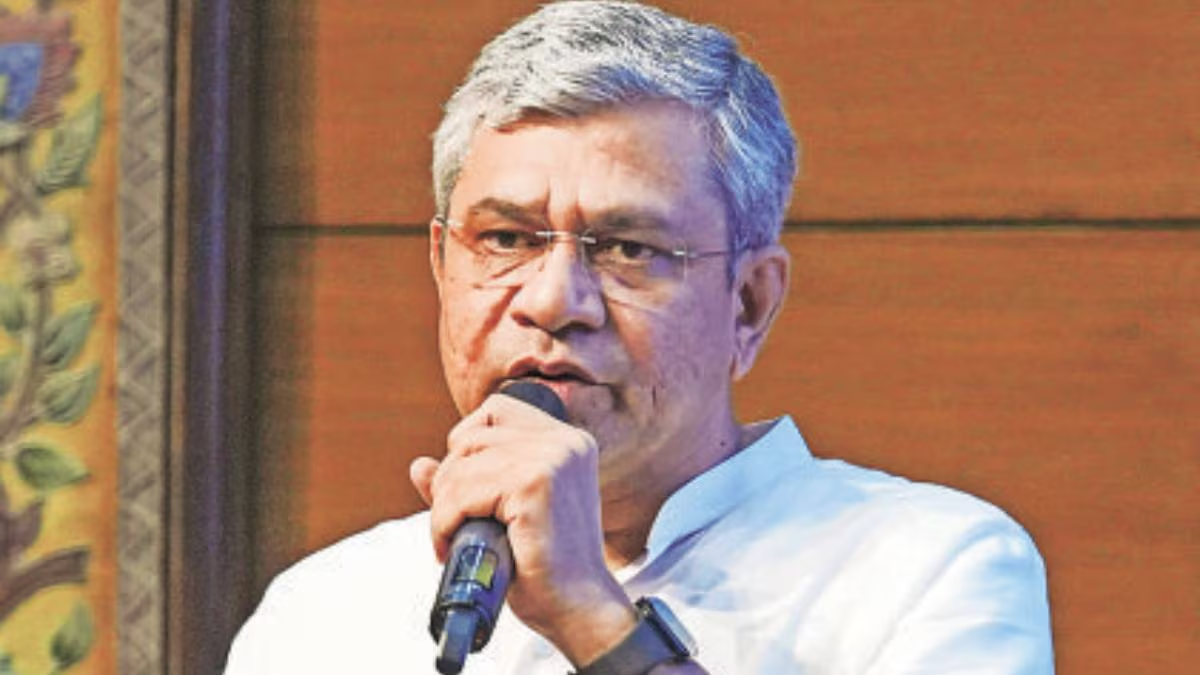
Unveiling the framework, Information and Broadcasting Minister Ashwini Vaishnaw said the policy would provide a strategic roadmap for improving India’s sporting ecosystem, with emphasis on building world-class infrastructure, coaching, and athlete support systems.
“We have used the experience of the last 10 years. The major objective is to make India a top-five sporting nation by 2047,” Vaishnaw told reporters in New Delhi.
The announcement coincided with a visit by an Indian delegation to the International Olympic Committee (IOC) headquarters in Lausanne, where India formally pitched for hosting the 2036 Summer Olympics. Ahmedabad and Gandhinagar are being considered as potential host cities.
India is also eyeing several other major sporting events, including the 2030 Commonwealth Games, the 2027 Women’s Volleyball World Championship, the 2028 U-20 World Athletics Championships, and the 2029 World Police and Fire Games.
The new policy aims to leverage major events to boost the country’s tourism sector and stimulate local economies. “By attracting international participants and spectators, India can significantly enhance its global image,” the policy document states.
Modi described the cabinet’s approval as a landmark moment. “This policy is anchored on five pillars… May Indian sporting talent always flourish!” he posted on X (formerly Twitter). The sports policy also calls for aligning sports with India’s education reforms. Sports will be integrated into school curricula, with a focus on training educators and physical education teachers to promote grassroots participation.
To support athlete development, the government aims to encourage private-sector investment in Olympic sports and promote a “league culture” across disciplines. Sports Minister Mansukh Mandaviya recently held consultations with more than 40 companies to explore such partnerships.
Calling it a “transformative step,” Mandaviya said the policy would promote infrastructure growth, support talent, and enhance India’s competitiveness in global sports. The policy is the result of broad consultations involving NITI Aayog, state governments, national sports federations, athletes, and domain experts. The government said even the IOC was consulted during the drafting process.