

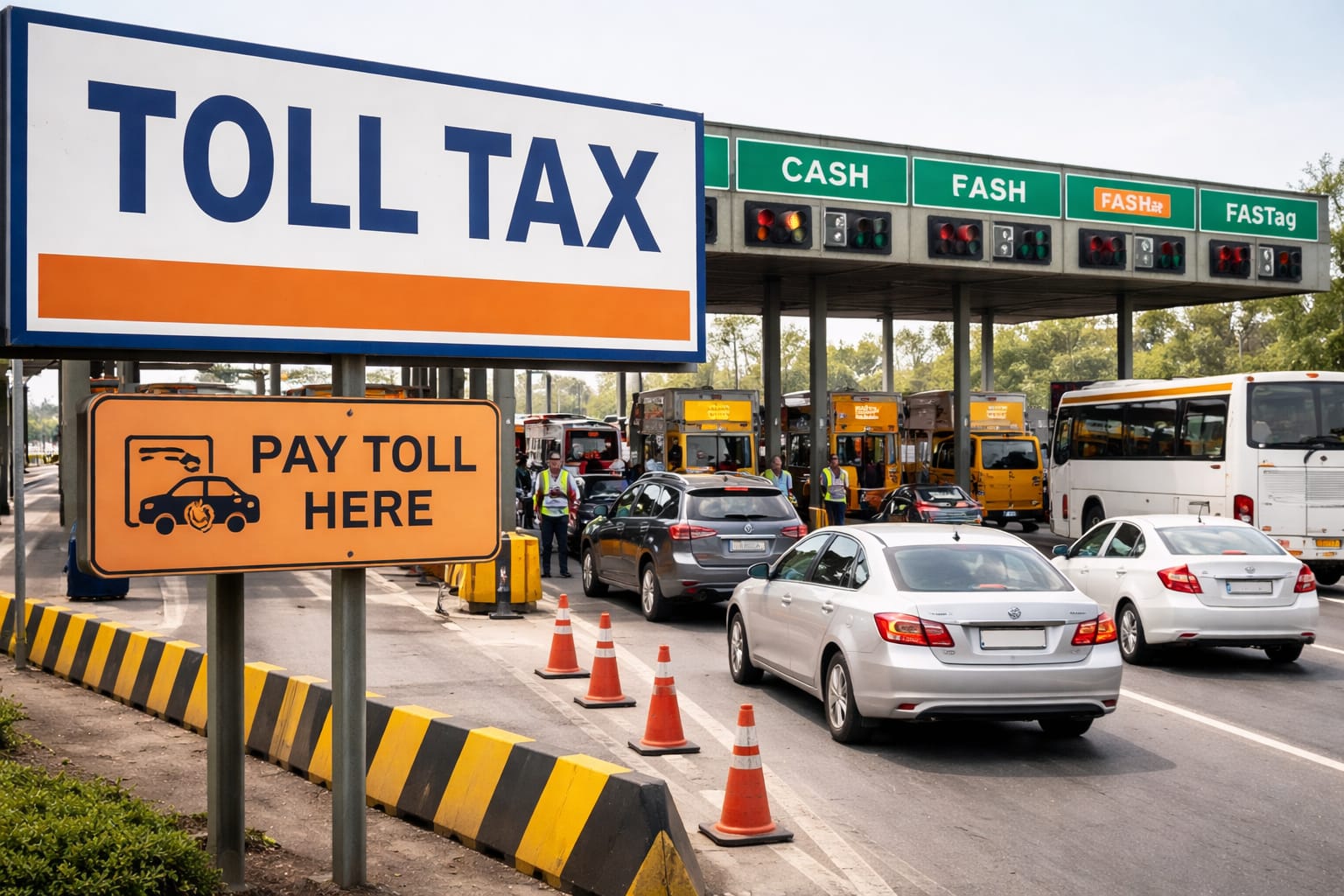
Chandigarh/Shimla,Feb 19: In a move aimed at boosting revenue amid financial stress, the Himachal Pradesh government has announced a steep hike in vehicle entry toll fees for the financial year 2026–27. The revised rates will come into effect from April 1 under the Himachal Pradesh Tolls Act, 1975.
The decision has been taken by the government led by Chief Minister Sukhvinder Singh Sukhu, with officials stating that the revision will help strengthen state finances and streamline toll operations.
Private Vehicles to Pay ₹170
Under the new rates, private vehicles entering from neighbouring states such as Punjab, Haryana, Delhi and Uttar Pradesh will now have to pay ₹170 as entry tax, up from ₹70 earlier.
“Private vehicles entering from neighbouring states will now have to pay ₹170 as entry toll tax, up from ₹70,” officials said.
The toll for 12+1 seater passenger vehicles has also been raised from ₹110 to ₹170. Heavy and large goods vehicles will now pay ₹900 instead of ₹720, while commercial buses will be charged ₹600, up from ₹320. The entry fee for mini buses (32-seater) has been increased from ₹180 to ₹320.
Construction machinery such as JCBs will be charged ₹800 instead of ₹570, and tractor owners will now pay ₹100, up from ₹70. However, toll charges for double-axle buses and trucks will remain unchanged at ₹570. Vehicles registered in Himachal Pradesh will continue to remain exempt from entry tax.
“The revised rates, nearly doubling in several categories, will come into force from April 1,” the notification stated.
Key Entry Points
The toll barriers are located at major entry and transit points, including Govindghat (Sirmaur), Kandwal (Nurpur), Mehatpur (Una), Baddi, Parwanoo and near Garamora in Bilaspur district.
One of the busiest toll points is Parwanoo on the Kalka-Shimla National Highway, which serves as a key gateway for tourists heading to Shimla.
FASTag Mandatory, Online Auctions
Under the new toll barrier policy, FASTag has been made mandatory at all entry points. Entry fees will be collected at the barriers, and toll barrier auctions will now be conducted online to enhance transparency.
The base bid for a single toll barrier has been fixed at ₹5 crore, and interested bidders will have to deposit a non-refundable participation fee of ₹25,000. District-level monitoring committees headed by Deputy Commissioners will oversee operations.
Government officials said the integration of FASTag systems is expected to improve efficiency and reduce leakages.
“Government officials say this move will increase revenue and streamline the toll system,” sources added.
Impact on Tourists and Freight
The sharp increase in entry tax is expected to impact tourists and freight operators, potentially leading to higher travel and transportation costs. However, the government maintains that the revision is necessary to augment revenue and ensure smoother toll operations across the hill state.
