

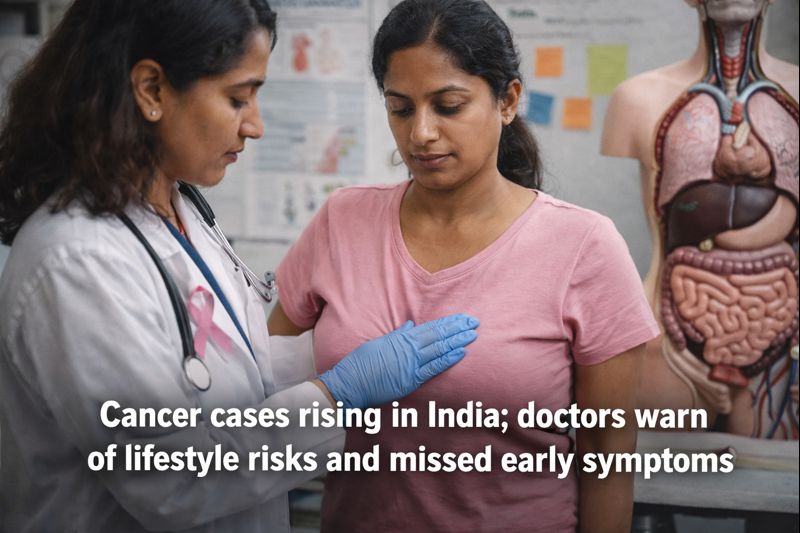
New Delhi, Dec 22: Cancer cases in India are rising steadily across multiple cancer types, with doctors warning that while improved diagnostics and wider access to healthcare have increased detection, the absolute growth in numbers is a cause for concern.
Oncologists say India’s growing cancer burden is being driven by a combination of lifestyle factors and environmental exposure. Tobacco and alcohol use remain major contributors, while obesity and air pollution act as significant catalysts in cancer development. At the same time, public health interventions such as vaccination programmes have shown success in reducing certain cancers, with Hepatitis B vaccination leading to a decline in liver cancer and HPV vaccination contributing to falling cervical cancer rates.
Experts stress that most cancers are not inherited. “Only about 5–10% of cancers are hereditary; 90–95% are sporadic,” said Dr Narayan Subramaniam, noting that these cases arise from DNA damage that accumulates over time due to ageing and environmental exposures.
Doctors say one of the biggest challenges is delayed diagnosis. Many cancers begin with subtle symptoms that are ignored or dismissed. Any abnormal symptom lasting more than two to three weeks should be medically evaluated, preferably by a general physician, who can then refer patients to specialists if needed.
Common early warning signs include breast lumps or nipple discharge, red or white patches in the mouth, blood in stool or changes in bowel habits, persistent acidity or bloating, unexplained fatigue, weight changes, and persistent pain or skin changes.
Cancer, doctors add, can occur even in non-smokers and non-drinkers. While lifestyle choices cannot eliminate risk entirely, maintaining physical fitness improves treatment tolerance and survival outcomes if cancer develops. Cancer begins when DNA damage exceeds the body’s ability to repair it, allowing abnormal cells to multiply unchecked.
Screening and early detection remain critical. Screening recommendations vary by age, cancer type and individual risk, with most routine screening beginning between 40 and 50 years. Common tests include mammography for breast cancer, PSA tests for prostate cancer, visual mouth examinations for oral cancer, low-dose CT scans for high-risk smokers to detect lung cancer, and stool tests for colorectal cancer.
Health experts have also cautioned against misconceptions around “safe” drinking. There is no safe amount of alcohol, they say, and cancer risk does not drop immediately after quitting tobacco or alcohol. It can take nearly a decade of abstinence for the risk to approach that of a non-user. Obesity, too, significantly increases cancer risk, with the World Health Organization identifying weight reduction as a key cancer prevention strategy.
Early-stage cancers—classified as Stage 1 or 2—generally have better outcomes than advanced stages, but doctors stress that prognosis varies widely by cancer type and treatment response. Self-examination, including mouth checks while brushing teeth, can help spot early warning signs, particularly for oral cancer.
Oncologists estimate that nearly 80% of cancer patients miss early symptoms, leading to late-stage diagnoses that often respond poorly to treatment. Early detection, they emphasise, remains one of the most effective ways to improve survival and treatment outcomes.
