

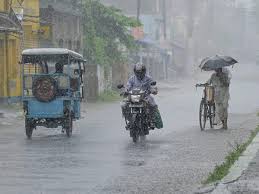
New Delhi, April 15 – India is likely to receive above-normal rainfall during the upcoming monsoon season, the national weather office said on Tuesday, offering relief to the country’s agriculture-dependent economy amid a period of intense heat. The India Meteorological Department (IMD) forecast cumulative rainfall at 105% of the long-period average (LPA) of 87 cm during the June-to-September season. The LPA is based on data collected between 1971 and 2020.
“El Nino conditions, which are typically associated with weak monsoons in India, are unlikely to prevail this year,” IMD Director General Mrutyunjay Mohapatra told reporters in New Delhi.
The forecast comes at a time when large parts of the country are already experiencing extreme temperatures, with a high number of heat wave days expected through June. The scorching conditions have raised concerns over power grid stress and water shortages.
The monsoon, which accounts for about 70% of India’s annual rainfall, is vital for the agricultural sector that employs over 42% of the population and contributes roughly 18% to the country’s GDP. Nearly 52% of India’s net sown area is rain-fed, underscoring the critical role of seasonal rains in ensuring food and water security.
The IMD’s announcement is expected to ease concerns over crop output and inflationary pressures, particularly after last year’s erratic monsoon impacted harvests of rice, pulses, and oilseeds. Independent forecaster Skymet has also predicted a ‘normal’ monsoon this year.
However, climate scientists caution that a forecast of normal total rainfall does not guarantee consistent rain across regions or time periods. Recent years have seen growing variability in rainfall patterns, driven by climate change. “While the number of rainy days is declining, extreme rain events — where large amounts of rain fall in short bursts — are increasing, contributing to both droughts and floods,” experts warn. The IMD is expected to release a region-wise and monthly rainfall distribution outlook in May.