

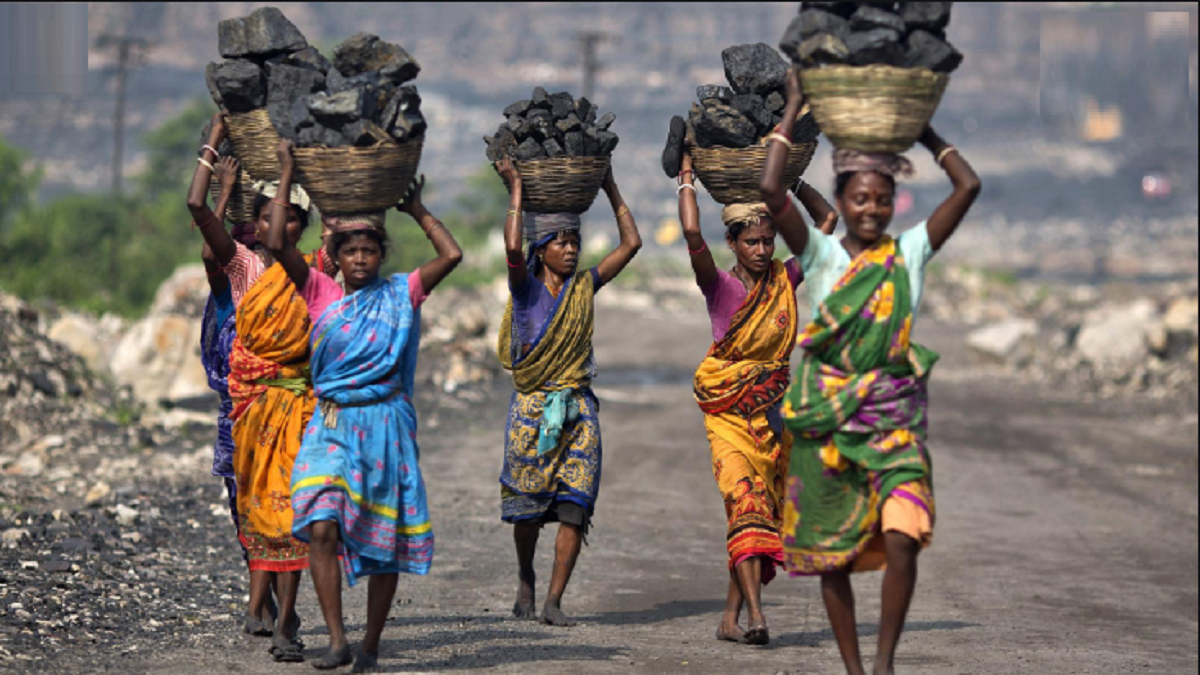
New Delhi, Dec 15: Hundreds of workers on Sunday staged a protest at Jantar Mantar here against the Centre’s four new labour codes, alleging that the changes are “bizarre” and against workers’ welfare.
The protesters opposed the Code on Wages, Code on Social Security, Industrial Relations Code and the Occupational Safety, Health and Working Conditions (OSH) Code, which came into force on November 21, replacing 29 Central labour laws enacted over the past five years.
The demonstration was organised by the Mazdoor Adhikar Sangharsh Abhiyan, a joint platform of 13 workers’ organisations and trade unions.
Protesters claimed that the revised thresholds for factory licences — from 10 to 20 workers in units using power and from 20 to 40 workers in units without power — could deprive workers of Employees’ State Insurance (ESI) and Provident Fund benefits. Contractual workers, they said, would become more vulnerable and lose social security coverage.
They also alleged that the Industrial Relations Code, which mandates a 14-day notice period before strikes in all sectors, curtails workers’ right to strike. Workers further claimed that the new provisions allow employers to retrench employees without serving prior notice.
The OSH Code provision permitting women to work night shifts was termed impractical by protesters, who cited the absence of adequate safety infrastructure such as crèche facilities.
Meanwhile, the Centre is set to introduce a Bill in the Lok Sabha to replace the Mahatma Gandhi National Rural Employment Guarantee Act (MNREGA) with a new job guarantee scheme.
The proposed legislation, titled the Viksit Bharat—Guarantee for Rozgar and Ajeevika Mission (Gramin) Bill, 2025, seeks to increase the guaranteed number of workdays from the current 100 to 125 days.
MNREGA was enacted in 2005 and renamed in 2009, providing rural households up to 100 days of unskilled wage employment annually. However, the average employment generated per household stood at around 50 days in 2024–25.
Official data show that only 40.70 lakh households completed 100 days of work last year, while in the current financial year, just 6.74 lakh families have reached the 100-day ceiling.
Several states have demanded an increase in the work limit, though work beyond 100 days must be funded by the states themselves. Of the 290 crore person-days generated in 2024–25, only 4.35 crore person-days were financed by states such as Maharashtra, Chhattisgarh, Odisha, Kerala, Rajasthan, Madhya Pradesh and Telangana.
The government will also introduce a Bill on the sustainable harnessing and advancement of nuclear energy in the Lok Sabha.
