

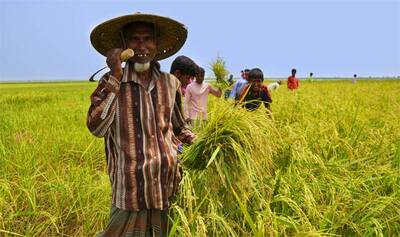
New Delhi, July 18: India on Wednesday approved a new nationwide farm programme, the Prime Minister Dhan-Dhaanya Krishi Yojana (PMDDKY), aimed at increasing agricultural productivity and promoting sustainable practices, with a total outlay of ₹1.44 trillion ($17.3 billion) over six years.
The scheme, announced in the Union Budget earlier this year, will merge 36 existing schemes from 11 central ministries into a unified initiative, with an annual allocation of ₹24,000 crore starting 2025-26, Union Minister Ashwini Vaishnaw said after a Cabinet meeting.
“This scheme will help 17 million farmers,” Vaishnaw said, adding that it is the first central programme of its kind to focus exclusively on agriculture and allied sectors. The PMDDKY will prioritise improving post-harvest infrastructure, irrigation facilities, and credit access at the grassroots level. It will also support crop diversification, natural farming, and resource conservation.
The government plans to roll out the scheme in 100 districts identified using indicators such as low productivity, low cropping intensity, and limited credit disbursement. At least one district will be selected from every state and union territory, based on net cropped area and operational holdings.
The scheme will be implemented through convergence with state schemes and partnerships with the private sector. Committees will be formed at national, state, and district levels to plan, implement and monitor progress, with monthly reviews.
“District-level plans will be developed with input from progressive farmers to align with national goals such as self-sufficiency and sustainable agriculture,” an official release said.
Abhishek Jain, Director at the Council on Energy, Environment and Water (CEEW), welcomed the scheme’s emphasis on resilience and value addition but criticised the use of credit disbursement as a selection metric.
“A resilient agricultural system should not be dependent on credit,” Jain said. “Instead, expanding income sources and sustainable practices should reduce the need for external borrowing.” India’s agriculture sector employs nearly half of its workforce but contributes just under 20% to the GDP, and the government has been under pressure to make farming more profitable and sustainable amid growing climate and water stress.