New Delhi, June 15: India has moved to suspend a longstanding rare earth export agreement with Japan, seeking to safeguard domestic supplies amid global trade tensions and reduce its dependence on China, two government sources told Reuters.
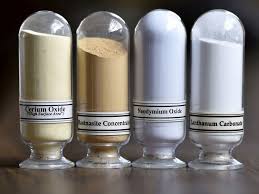
The Indian government has asked state-run Indian Rare Earths Limited (IREL) to suspend a 13-year-old deal under which it supplies rare earth materials to Toyotsu Rare Earths India, a subsidiary of Japanese trading giant Toyota Tsusho. The materials are processed in India and shipped to Japan, where they are primarily used in electric vehicle (EV) magnets.
India, which holds the world’s fifth-largest rare earth reserves, wants to retain these critical minerals for domestic processing and manufacturing, particularly in sectors like auto, defence, and pharmaceuticals. The move comes in response to China’s tightening of rare earth exports since April and the broader global effort to diversify away from Chinese-controlled supply chains.
Commerce Minister Piyush Goyal recently urged IREL to halt its exports, especially of neodymium, a key element used in permanent magnets for EV motors, one of the sources said. The Commerce Ministry, IREL, and the Department of Atomic Energy, which oversees IREL, did not respond to requests for comment.
The 2012 bilateral agreement between India and Japan complicates any immediate withdrawal from the deal, the source added. “IREL wants this to be amicably decided and negotiated because Japan is a friendly nation,” the person said.
In 2024, Toyotsu shipped more than 1,000 metric tons of rare earth materials to Japan — roughly a third of IREL’s 2,900-ton output that year — customs data showed. Japan continues to rely predominantly on China for its rare earth needs. Toyota Tsusho and its Indian unit did not immediately respond to Reuters queries.
The export curbs from China — which holds a near-monopoly on global rare earth processing — have rattled manufacturers globally, rekindling fears of supply chain disruptions. A similar episode occurred in 2010, when China halted shipments to Japan during a diplomatic standoff, prompting Tokyo to seek alternative suppliers, including India.
Despite its rich reserves, India currently lacks large-scale magnet production and has no integrated rare earth supply chain. In the fiscal year to March 2025, India imported 53,748 metric tons of rare earth magnets, mostly from China.
IREL has historically exported rare earths due to limited domestic processing capacity. However, the company is now pursuing self-reliance and expansion. It aims to produce 450 metric tons of extracted neodymium by March 2026 and double that capacity by 2030. The company operates a rare earths extraction plant in Odisha and a refining unit in Kerala.
IREL is awaiting statutory clearances for four new mining projects and is scouting for a corporate partner to manufacture magnets for use in EVs and medical applications, the second source said.
India is also finalising incentive schemes to attract private players to invest in rare earth processing and magnet production, Reuters reported earlier this month.
India’s rare earth industry is tightly regulated. Mining is restricted to IREL, which supplies critical materials for the country’s atomic energy and defence sectors. Analysts warn that despite policy moves, the development of a viable domestic rare earth supply chain may still be years away.
Japan’s Trade Ministry, in response to Reuters queries, declined to comment on specific bilateral matters.