

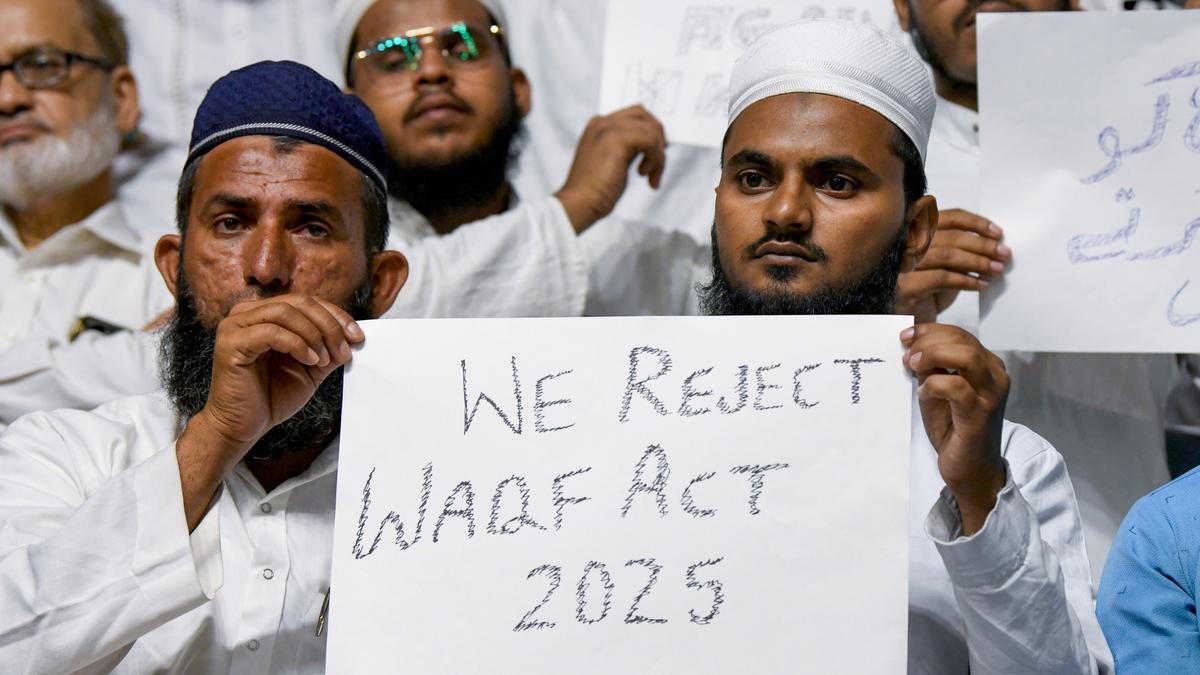
New Delhi, May 5 – India’s ruling Dravida Munnetra Kazhagam (DMK) party in Tamil Nadu and the Indian Union Muslim League (IUML) have asked the Supreme Court to halt implementation of the Waqf (Amendment) Act, 2025, arguing that the law violates constitutional guarantees and threatens centuries-old Muslim endowments.
In separate affidavits submitted ahead of a key hearing on Monday, both parties said the law’s provisions targeting waqf-by-user properties – those held and used for religious or charitable purposes for generations – were legally unworkable and discriminatory.
The DMK, represented by senior advocate P. Wilson, said nearly 95% of stakeholders who appeared before the Joint Parliamentary Committee (JPC) had opposed the amendments. “The remaining 5% supported it under communal banners, casting doubt on the impartiality of the process,” the party said in a filing.
The DMK warned that implementation of the law, even temporarily, could lead to irreversible changes in the legal status of waqf properties. “A temporary stay would preserve the status quo and prevent irreparable harm,” the party said.
The IUML supported the demand for an interim stay, warning that mosques, graveyards, orphanages and schools across India could lose their waqf status and risk takeover by the federal government. Both parties argued that the law’s requirement for naming original donors for waqfs created centuries ago is impractical, and that the legal status of waqf-by-user does not depend on formal registration.
The Centre has defended the law, saying it aims to curb misuse of waqf claims that have led to “rampant encroachments” on public and private lands. Government data cited a 116% increase in waqf land between 2013 and 2024. The Union government has also assured the court it will not denotify waqf properties or appoint non-Muslims to the Central Waqf Council or state boards while the case is pending.
The Supreme Court’s special bench led by Chief Justice Sanjiv Khanna is expected to hear arguments for an interim stay on May 5. The Waqf (Amendment) Act, 2025, which was passed earlier this year, has sparked protests among opposition parties and Muslim groups, who say the changes undermine religious freedom and target minority institutions.