

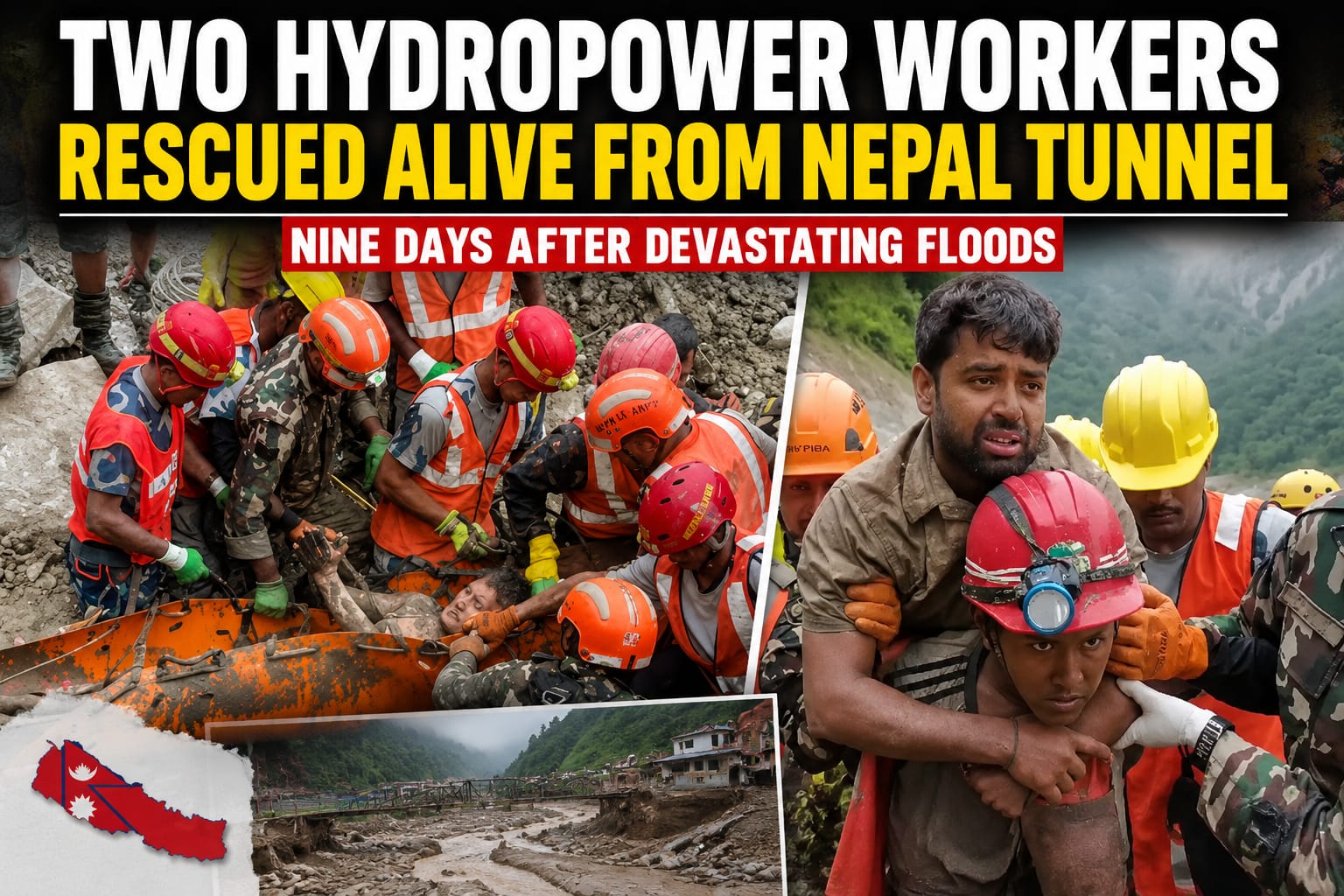
Kathmandu, Sep 4: Two hydropower workers trapped inside debris-filled tunnels at Nepal’s Trishuli 3A project were rescued alive on Friday, nine days after devastating flash floods swept through the Himalayan nation, as authorities continued a massive search for thousands of people still missing.
The workers were pulled out during an ongoing rescue operation at the Trishuli 3A hydropower project, where tunnels had been buried by debris following the catastrophic flooding on August 26.
Nepal Energy Minister Biraj Bhakta Shrestha confirmed the rescue, saying one worker was safely brought out of the tunnel, followed shortly afterwards by a second worker.
«“Person was just safely rescued from the tunnel of Trishuli 3A,” Shrestha said.»
Nepal Army spokesperson Brig Gen Raja Ram Basnet said the rescue was carried out as part of the continuing operation at the hydropower project’s tunnel.
The successful rescue has raised hopes that more people could still be found alive in areas cut off or buried by the disaster, even as rescue teams face difficult terrain and continuing weather-related risks.
The floods, which struck Nepal on August 26 and were believed to have been triggered by a glacier collapse, caused widespread destruction across towns and valleys, particularly along the Bhotekoshi and Trishuli river corridors.
The disaster has left a huge humanitarian crisis in its wake. Official figures cited in different updates put the death toll at between 1,259 and 1,282, while the number of people missing has been reported at between 4,798 and 5,083.
Around 600 children are also reported to remain unaccounted for in Rasuwa and Nuwakot districts, adding urgency to the continuing search operation.
A joint command of Nepal’s security forces is conducting searches across affected areas, while authorities continue to recover bodies from locations devastated by the floods.
The rescue operation is being complicated by continued rainfall in upstream areas of the Bhotekoshi River, raising concerns over the possibility of fresh flooding and making access to some affected locations more difficult.
Meanwhile, the Nepal government has begun turning its attention towards the longer-term recovery effort. The Cabinet has announced a relief package for businesses affected by the floods, describing the business-related measures as the first phase of its recovery package.
The government is also planning the relocation of settlements severely affected by the disaster as part of its wider rehabilitation and reconstruction strategy.
The floods have also disrupted an important trade and travel route between Nepal and China. The Kerung (Gyirong)-Rasuwa border crossing, a key transit point between the two countries, has been affected by the disaster.
The rescue of the two hydropower workers comes as Nepal continues to grapple with the enormous scale of the disaster, with rescue teams searching for missing people while authorities simultaneously work to provide medical assistance, relief supplies and shelter to survivors.
The dramatic survival of the two workers after nine days underground has provided a rare moment of hope amid the devastation, even as the country’s security forces and emergency agencies remain engaged in one of Nepal’s largest recent rescue operations.
