

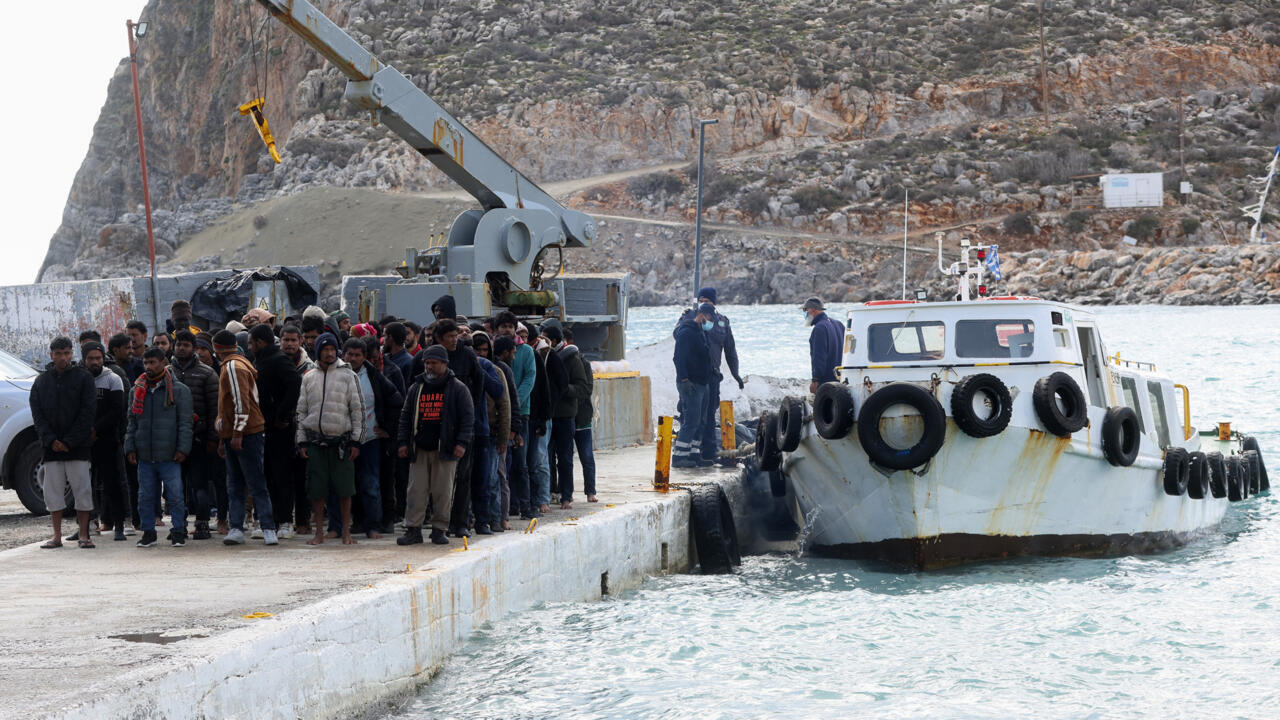
Athens, Mar 28: At least 22 migrants have died after a small rubber boat drifted for nearly a week in the eastern Mediterranean, underlining the continuing risks faced by those attempting to reach Europe through irregular routes.
According to Greek authorities, the vessel departed from Tobruk in eastern Libya on March 21, carrying dozens of people seeking entry into Europe. Survivors later reported that the boat lost direction during the journey, leaving passengers stranded at sea for six days without access to food or drinking water.
A total of 26 people were rescued by a European border patrol vessel off the southern coast of Crete. Among them were a woman and a minor, while two individuals required hospitalization in Heraklion due to critical conditions.
Greek coastguard officials said deteriorating weather conditions, combined with severe shortages of basic supplies, contributed significantly to the fatalities. Testimonies from survivors also indicated that the bodies of those who died during the journey were disposed of at sea under instructions from smugglers on board.
Authorities have detained two men from South Sudan, aged 19 and 22, on suspicion of facilitating the crossing. They are currently under investigation for human trafficking, illegal entry, and negligent homicide.
The incident reflects broader migration patterns across the Mediterranean, where countries such as Greece and Italy remain primary entry points for undocumented migrants. Libya, in particular, has evolved into a major departure hub following the 2011 collapse of the regime of Muammar Gaddafi.
Data from the United Nations High Commissioner for Refugees indicates that more than 41,000 people arrived in Greece by sea in 2025, while over 100 deaths or disappearances have already been recorded in the eastern Mediterranean this year. Humanitarian agencies warn that the actual toll is likely higher, with many incidents going undocumented.
Despite increased border controls and enforcement measures, thousands continue to undertake the dangerous crossing each year, often relying on overcrowded and poorly equipped vessels operated by smuggling networks.
