

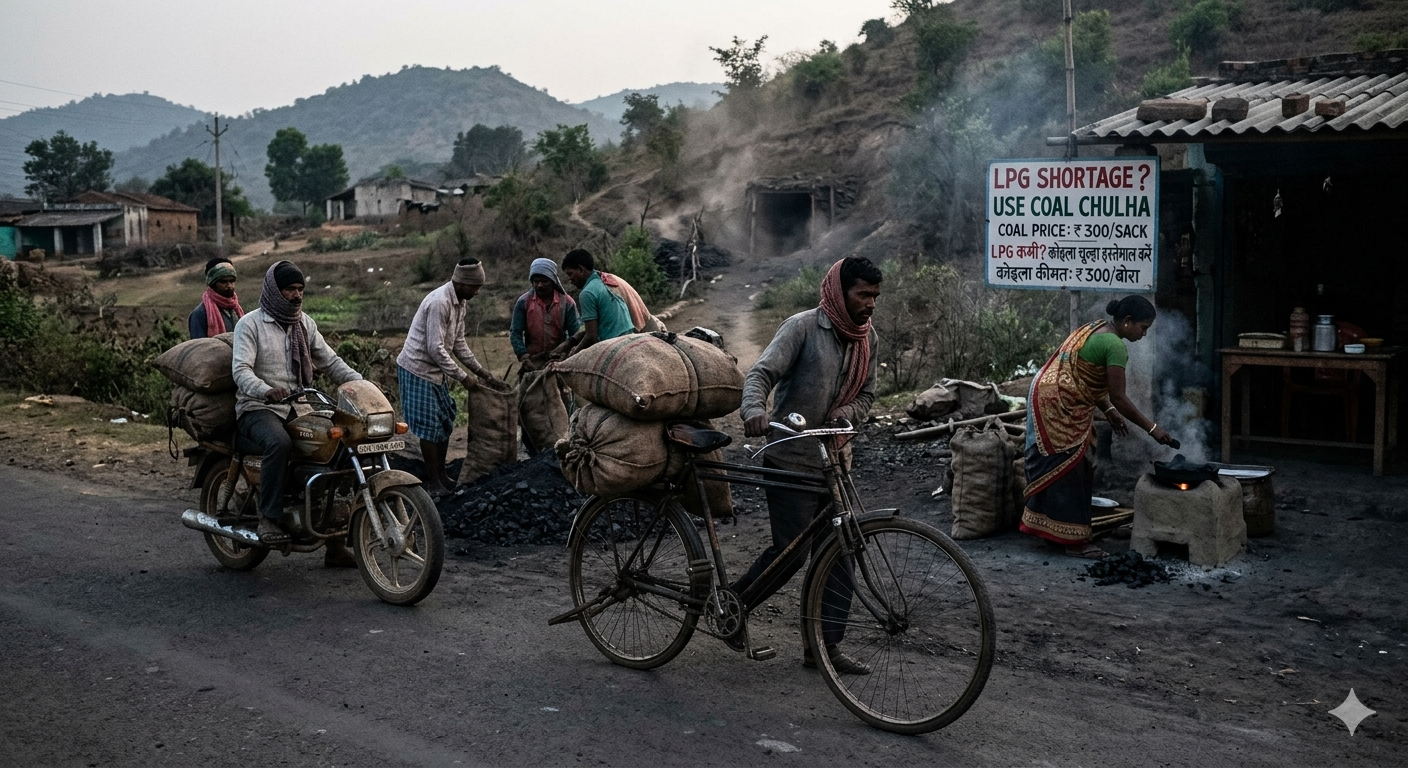
Ranchi, Mar 20: An ongoing LPG supply disruption in Jharkhand has triggered a sharp rise in demand for coal, leading to the expansion of an illegal coal trade across several districts, including Ranchi, Hazaribag, Chatra and Ramgarh.
With cooking gas supplies affected, eateries and roadside dhabas have increasingly shifted to coal-based chulhas, while reports indicate that even midday meals in some government schools are being prepared using coal. Much of this coal is sourced from abandoned and illegal mines in coal-rich areas such as Mandu, Charhi, Barkagaon and Keredari, creating a parallel and unregulated supply chain.
Local villagers extract coal from abandoned pits and transport it in sacks via bicycles and motorcycles, often during late night or early morning hours. Despite the risks involved and periodic crackdowns by authorities, the trade continues to thrive due to rising demand.
The surge in demand has also pushed up prices, with coal sacks now selling for ₹250–₹300 compared to around ₹180 earlier. The increase has raised operational costs for food businesses, many of which rely heavily on coal to sustain daily operations.
Coal hawkers, meanwhile, are witnessing a boom in activity. Ramesh Mahto, a local supplier, said his workload and earnings have increased significantly. “Earlier, I only used to make one round… now, I have cut down on the distance to cover more clients,” he said, adding that his earnings “have more than doubled.” Many hawkers have also engaged family members to meet the growing demand.
Restaurant owners say the dependence on coal is driven by necessity. “People don’t mind buying coal illegally to run chulhas,” said Suresh Prasad, who operates an eatery along NH-33, where dozens of establishments support hundreds of livelihoods.
However, the rising demand has also strained supply chains. “All chulhas at our dhaba run on coal stoves… demand is making it difficult for hawkers to supply coal in time,” said Munsi Rajwar, a dhaba owner in Ramgarh.
Officials warn that the extraction of coal from abandoned mines poses serious safety risks, even as the informal and unregulated nature of the trade continues to challenge enforcement efforts.
