

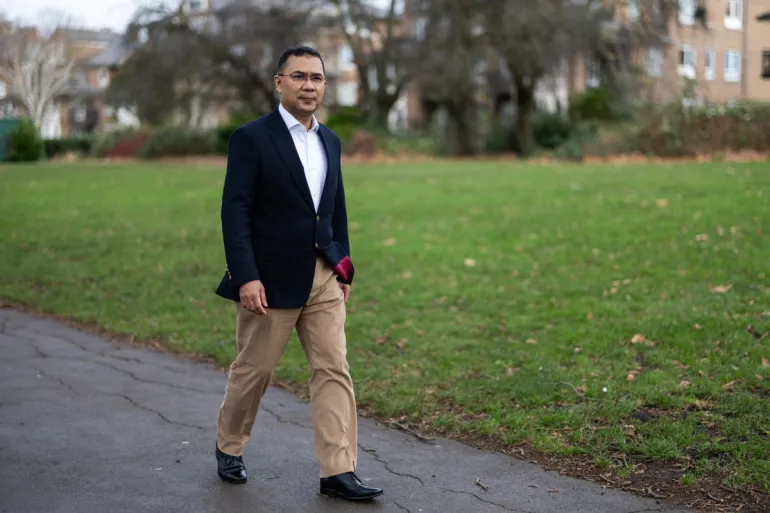
Dhaka, Jan 9: The return of Bangladesh Nationalist Party (BNP) leader Tarique Rahman after 17 years in exile has reshaped the country’s political landscape, placing a familiar dynastic figure at the centre of a nation still struggling to stabilise after the collapse of Sheikh Hasina’s government last year.
Rahman’s arrival comes amid a leadership vacuum following the August 2024 uprising that forced Hasina to flee to India, ending more than a decade of centralised rule. While the interim administration led by Nobel laureate Muhammad Yunus continues to oversee the transition, political authority on the streets has increasingly overtaken formal institutions.
The turning point for the BNP came days after Rahman’s return, with the death of former prime minister Khaleda Zia, marking the end of the party’s founding generation. Rahman has since assumed undisputed leadership of the BNP as the country moves toward national elections scheduled for February 12.
Bangladesh’s political environment has changed significantly since Rahman last held influence in 2008. Analysts say the dismantling of opposition space under Hasina left behind weakened state institutions, a polarised society and eroded public trust in governance. Against this backdrop, Rahman is attempting to recast his political image, shifting from confrontational rhetoric to a more conciliatory tone focused on rule of law, minority rights and national unity.
Supporters view him as a symbol of renewed political choice after years of managed elections. Critics, however, point to his past association with informal power structures and unresolved corruption allegations as evidence of the entrenched elite politics that have long undermined democratic consolidation in Bangladesh.
The credibility of any future Rahman-led government, observers say, will depend heavily on institutional reform. Restoring confidence in the judiciary and the Election Commission is expected to be an early test of legitimacy, particularly among younger voters who played a key role in mobilising against the previous regime.
Economically, Rahman is widely expected to maintain policy continuity, given Bangladesh’s reliance on garment exports and foreign investment. However, analysts warn that pressures to reward party loyalists could revive rent-seeking practices at a time when the economy remains fragile.
Foreign policy, especially relations with India, is likely to be another defining challenge. While New Delhi enjoyed a stable partnership with Hasina, it has historically viewed the BNP with caution. Rahman has signalled a more balanced approach, seeking to assert national interests without provoking confrontation with Bangladesh’s most influential neighbour.
Political uncertainty, long suppressed under authoritarian stability, has returned to Bangladesh. Whether this moment leads to institutional renewal or another cycle of political retribution may ultimately define both Rahman’s leadership and the country’s democratic future.
