

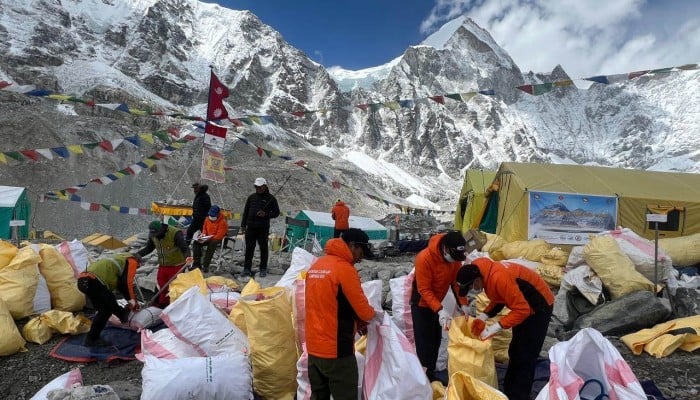
Kathmandu, Jan 2: Nepal has decided to discontinue its long-running refundable waste deposit scheme for Mount Everest climbers after concluding that the policy failed to curb the growing accumulation of garbage on the world’s highest peak.
Introduced more than a decade ago, the scheme required climbers to deposit $4,000, refundable upon returning with at least eight kilograms of waste. While most climbers reclaimed their deposits, authorities found that the measure did not significantly reduce pollution at higher altitudes, where waste removal remains most difficult.
Tourism officials said rubbish continues to build up near upper camps despite compliance at lower levels of the mountain. An average climber generates roughly 12 kilograms of waste during an Everest expedition, which typically lasts several weeks.
Officials acknowledged that weak monitoring beyond the Khumbu Icefall checkpoint undermined enforcement, allowing waste such as abandoned tents, food packaging and human excrement to remain at extreme elevations.
Citing administrative challenges and limited environmental impact, the government plans to replace the refundable deposit with a non-refundable clean-up fee of $4,000. The proposed fee, subject to parliamentary approval, will be used to strengthen waste oversight through additional checkpoints, deployment of mountain rangers and expanded clean-up operations.
Authorities estimate Everest holds tens of tonnes of accumulated waste, much of which does not decompose due to freezing temperatures. The environmental strain has intensified as climbing activity increases, with around 400 climbers attempting the summit each year, alongside hundreds of guides and support staff.
Nepalese officials say the revised approach aims to ensure consistent funding for enforcement and waste management rather than relying on voluntary behavioural change, as the country seeks to protect its most iconic natural landmark.
