

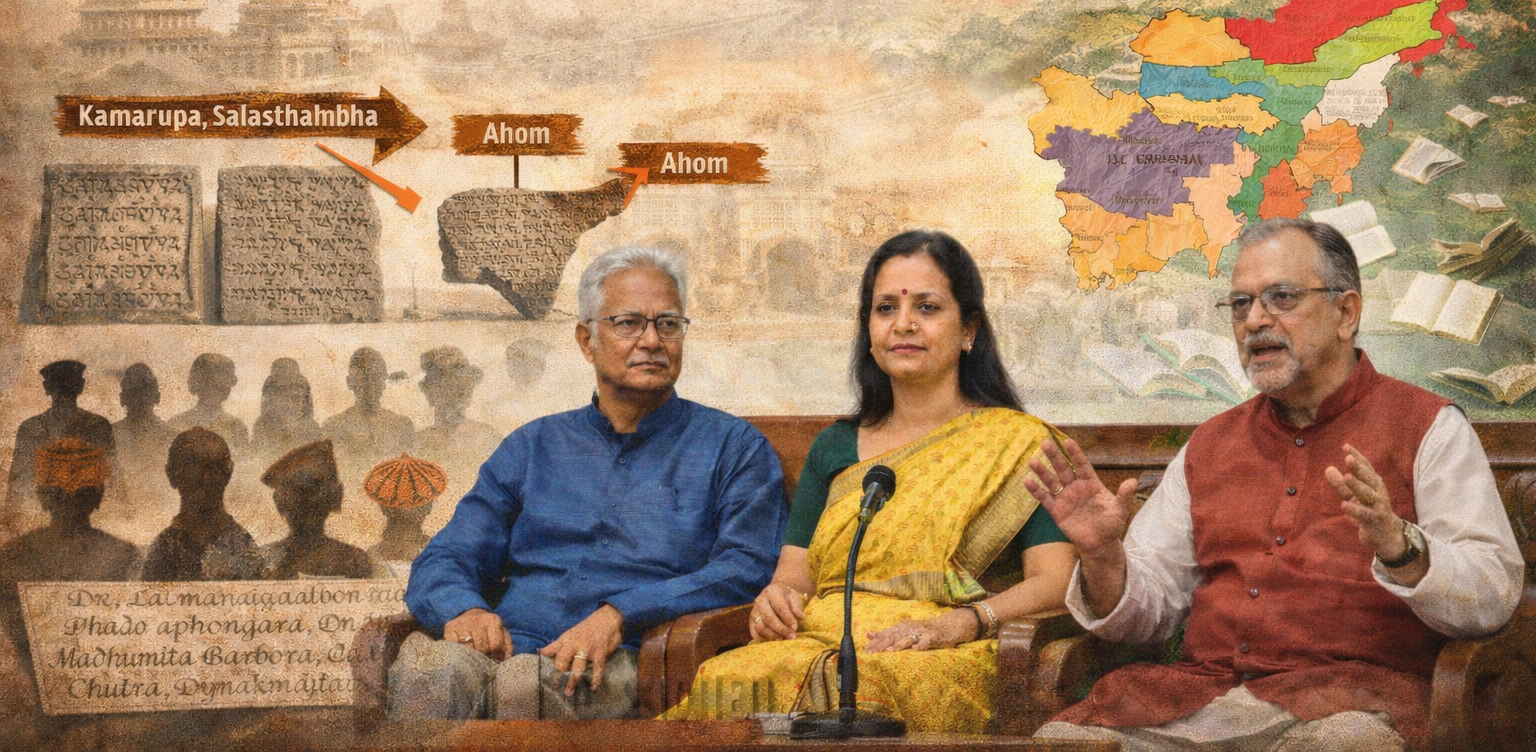
Nalanda, Dec 24: North-east India’s rich linguistic diversity and heritage of ancient inscriptions took centre stage on the third day of the Nalanda Literature Festival 2025, as scholars, writers and cultural thinkers called for greater preservation and research to safeguard the region’s endangered languages and historical memory.
A dedicated session on inscriptions from the north-eastern states, moderated by Dr ZD Lalmangaihzauva, featured scholars Dr Madhumita Barbora and noted writer Arup Kumar Dutta.
The discussion explored how inscriptions shed light on the political, administrative and religious evolution of the region, particularly Assam.
The speakers examined epigraphic records from the Kamarupa, Salasthambha, Chutiya and Ahom dynasties, highlighting their value in understanding land systems, governance structures and the spread of religious traditions.
They also traced the evolution of scripts and languages in the region through these inscriptions. Emphasising the importance of epigraphy, Dutta described inscriptions as crucial to understanding the development of the Assamese language and identity.
He noted the lasting influence of Vaishnavite reformer Srimanta Sankardeva and stressed the urgent need to preserve endangered languages through inscriptions, literature and oral traditions.
The afternoon sessions broadened the focus to India’s wider linguistic diversity, with discussions on the languages of the Seven Sisters states, the role of tribal languages, and changing practices in literary translation between Indian languages and English.
Another session titled “Urdu: From Past to Present” traced the language’s historical evolution and its contemporary relevance. The day began with yoga and meditation sessions conducted by the Bihar School of Yoga, Munger.
This was followed by a session led by Prof. Ganesh Narayandas Devy titled “Language as Legacy: How Regional Tongues Safeguard Our Cultural Roots”, and another exploring the Nalanda spirit in global linguistic and literary traditions.
Historian Dr Vikram Sampath, speaking on reimagining Indian history from an indigenous perspective, said colonial-era frameworks continue to influence historical narratives.
He pointed to challenges in reconstructing history due to lost inscriptions, incomplete manuscripts and linguistic complexities, adding that history evolves with new evidence from archaeological discoveries at sites such as Dholavira, Rakhigarhi and Sinauli.
Mythologist Devdutt Pattanaik highlighted the role of oral literature traditions, explaining how stories function as rituals that transmit values and beliefs across generations.
He introduced the idea of “belief-based truth” to show how communities define ownership and identity through narratives. Renowned classical dancer Shovana Narayan and actor Akhilendra Mishra reflected on Nalanda as a tradition of dialogue and coexistence.
Narayan said the spirit of the ancient university lies in embracing plurality and mutual respect, while Mishra discussed Indian philosophical and linguistic traditions, including the Maheshwar Sutras.
The evening concluded with a classical performance by Padma Vibhushan awardee Dr Sonal Mansingh. The Nalanda Literature Festival continues through its final day on Friday.
