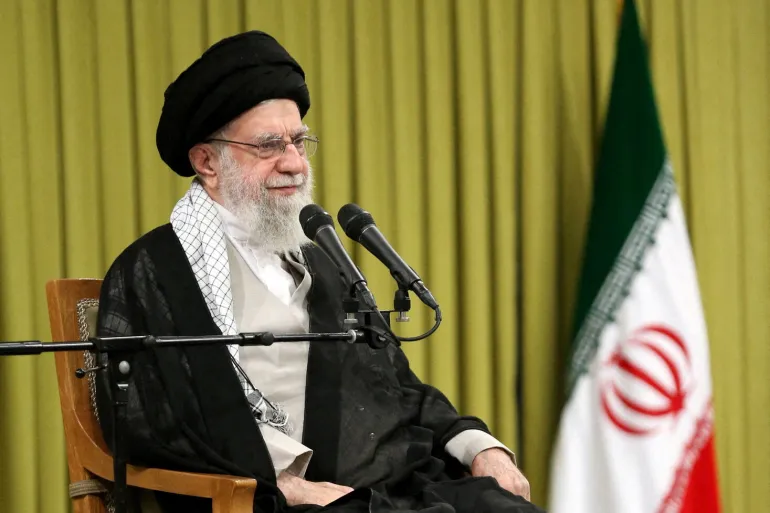
TEHRAN/WASHINGTON, May 22 – Iran’s Supreme Leader Ayatollah Ali Khamenei on Tuesday dismissed U.S. demands to halt uranium enrichment as “nonsense,” casting further doubt on the future of nuclear negotiations between Washington and Tehran.
“Saying things like ‘We will not allow Iran to enrich uranium’ is nonsense. No one [in Iran] is waiting for others’ permission,” Khamenei said in a televised address carried by the semi-official Mehr News Agency. He added that he did not know whether the current talks “will bring results.”
Since mid-April, Iran and the United States have held four rounds of indirect talks mediated by Oman, seeking to curb Tehran’s nuclear programme in exchange for partial sanctions relief. However, the talks have faltered amid hardening positions on both sides, and the next round – tentatively scheduled to be held in Rome this weekend – now appears uncertain.
U.S. negotiator Steve Witkoff reiterated Washington’s firm stance over the weekend, calling Iran’s uranium enrichment a “red line.”
“We cannot allow even 1 percent of an enrichment capability,” Witkoff said, insisting any agreement must eliminate Iran’s capacity to enrich uranium domestically.
Iran, which currently enriches uranium to 60% purity – far above the 3.67% limit set in the 2015 Joint Comprehensive Plan of Action (JCPOA) but below the 90% threshold for weapons-grade material – has consistently denied any intention to build nuclear weapons. Tehran maintains that its nuclear programme is peaceful and “non-negotiable.”
“Whether there is a deal or not, we will continue enriching uranium,” Iranian Foreign Minister Abbas Araghchi said on Sunday. Still, he noted that a deal preventing the development of nuclear weapons was “within reach.”
President Donald Trump, who withdrew the United States from the JCPOA during his previous term, has pursued a renewed “maximum pressure” strategy since returning to office in January. Last week, he warned that the negotiations must “move quickly or something bad is going to happen.”
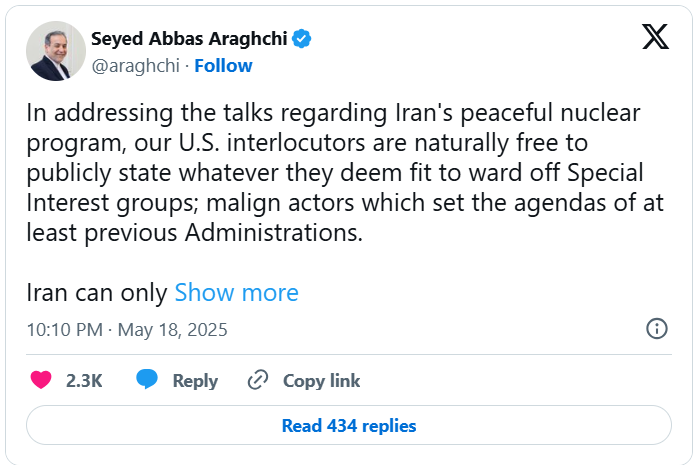
Tehran confirmed on Tuesday that it had received a fresh proposal from Washington and was reviewing it, though Iran’s Deputy Foreign Minister Majid Takht-Ravanchi warned that talks would collapse if the U.S. continued to demand a halt to enrichment.
The sharp rhetoric underscores the widening gulf between both sides and raises uncertainty about any near-term resolution, even as regional tensions remain high.