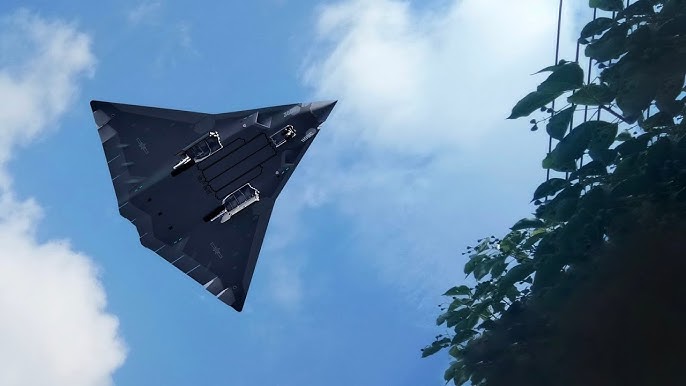
Beijing, May 7 – A Chinese sixth-generation stealth fighter jet under development could enforce an airspace blockade up to 1,000km from the country’s coastline for one to two hours in a potential conflict over Taiwan, according to a report in a state-affiliated military magazine.
The analysis, published in the March edition of Shipborne Weapons, said the fighter—unofficially dubbed the J-36—would enable the People’s Liberation Army (PLA) to intercept U.S. aircraft and suppress air defence capabilities at foreign bases in Guam, denying U.S. air superiority in the western Pacific.
“This will make it difficult for the U.S. Navy and Air Force to maintain air superiority over the western Pacific and to intervene militarily in a series of operations by the Chinese military within the first island chain,” the article said.
The Shipborne Weapons magazine is published by the China Shipbuilding Industry Corporation, a key defence contractor.
According to the article, the development of the sixth-generation fighter was prompted by vulnerabilities the PLA faces against advanced American platforms, particularly the B-21 Raider, a sixth-generation stealth bomber developed by Northrop Grumman.
The J-36, described as having a ginkgo leaf-shaped design, is reportedly being developed by Chengdu Aircraft Industry Corporation and has been observed conducting test flights near its Chengdu base in recent weeks, suggesting accelerated progress.
The first island chain, a geopolitical term referring to the stretch of islands including Taiwan and parts of the East and South China Seas, is seen by both China and the U.S. as a critical battleground in any future conflict over Taiwan.
The U.S. Air Force announced the development of its own sixth-generation fighter, known as the F-47, in March, although further details remain classified. Meanwhile, the B-21 Raider, touted as the world’s first sixth-generation bomber, completed its maiden flight in November 2023.
Northrop Grumman has stated that production is ahead of schedule and on budget, with plans to deliver at least 100 aircraft by the mid-2020s. Analysts say the emergence of sixth-generation aircraft could shift the balance of air power in the Indo-Pacific, where tensions between China and the United States have escalated over Taiwan, South China Sea navigation rights, and regional influence.