

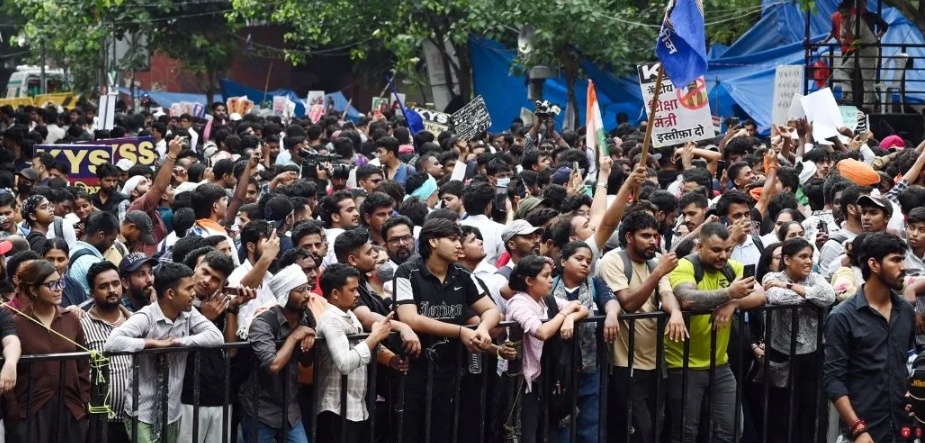
New Delhi, July 28: A Rajya Sabha member has approached the Supreme Court challenging the alleged use of facial recognition technology (FRT) and biometric surveillance by the Delhi Police during a recent protest at Jantar Mantar, arguing that such practices violate the constitutional rights to privacy and peaceful assembly.
The petition, filed by Rajya Sabha MP A. A. Rahim through legal counsel, seeks a declaration that indiscriminate biometric surveillance at peaceful public gatherings is unconstitutional unless specifically authorized and regulated by a law enacted by Parliament.
According to the plea, the Delhi Police allegedly deployed facial recognition technology and other surveillance tools, including CCTV cameras, drones and mobile monitoring units, to collect and process biometric data of protesters, journalists and members of the public.
It contends that such surveillance was carried out without an adequate legal framework governing its use.The petition argues that existing provisions, including the Criminal Procedure (Identification) Act, 2022, and police guidelines relating to public demonstrations, do not expressly authorize the use of biometric surveillance at peaceful protests.
It further claims that no privacy impact assessment was conducted before the deployment of facial recognition technology and cites information obtained through the Right to Information (RTI) Act to support this contention.Referring to the Supreme Court’s landmark privacy ruling in Justice K. S. Puttaswamy (Retd.) v. Union of India, the petitioner argues that the alleged surveillance does not satisfy the constitutional requirements of legality, legitimate state purpose and proportionality.
The plea also seeks directions requiring authorities to disclose details of the surveillance technologies, databases and private vendors involved in the operation. In addition, it requests the court to establish a mechanism enabling individuals to access information about any biometric data collected, seek its deletion and avail themselves of an effective grievance redressal process.
The petition further urges the court to direct private entities handling such biometric information to preserve relevant records during the proceedings, discontinue any use of the data and permanently delete it in accordance with judicial directions.
The Supreme Court is yet to take up the matter for hearing, and no notice has been issued on the petition so far. The allegations contained in the plea are yet to be examined by the court.
