

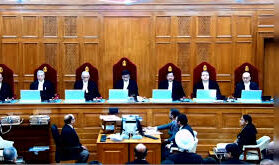
New Delhi, November 22: India’s Supreme Court said on Thursday that courts cannot bind the President or state Governors to fixed timelines for approving or returning legislation passed by state assemblies, ruling that such judicial intervention would violate the country’s constitutional separation of powers.
A five-judge Constitution Bench said the judiciary could not assume “deemed consent” for Bills left pending beyond a court-ordered deadline, calling the idea “antithetical” to the Constitution. The opinion was delivered in response to a Presidential Reference — the 16th in India’s history — seeking clarity on the powers of Governors and the President under Articles 200 and 201.
“Such a usurpation of the gubernatorial function, and similarly of the President’s functions, is antithetical not only to the spirit of the Constitution, but also specifically, the doctrine of separation of powers,” the bench, headed by Chief Justice B.R. Gavai, said.
However, the court said the President and Governors cannot indefinitely delay state legislation. “Prolonged and evasive inaction” would amount to thwarting the will of the people expressed through their elected legislatures, the judges observed.
The ruling comes a month after a separate two-judge bench set a three-month deadline for Governors to act on state Bills, a move criticised by some states including Tamil Nadu and Kerala. Both argued that the latest Presidential Reference was an attempt to overturn that judgment. The Constitution Bench rejected that view, saying it was free to clarify “general questions of law” raised by the President.
The court said Governors have three options under Article 200: grant assent, return the Bill to the legislature with comments, or reserve it for the President’s consideration. A Governor cannot simply stall a Bill without sending it back, the bench said, adding that the Governor is not bound by ministerial advice when exercising these powers.
The judges also held that courts may intervene only in “glaring” cases where a Governor’s inaction is prolonged and unexplained, and may issue a limited directive requiring a decision within a reasonable time. But Governors enjoy immunity from personal legal proceedings under Article 361.
The bench said it was impermissible for courts to scrutinise the content or merits of Bills before they become law. It also clarified that the President is not obligated to seek the Supreme Court’s advice on every Bill forwarded by a Governor.
The 111-page ruling, issued as an “Opinion of the Court” without an identified author, described the 14 questions posed by the President as a “functional reference” on the working relationship between state legislatures, Governors and the Union executive.
The court said imposing rigid deadlines would amount to a “one-size-fits-all” approach, noting that some Bills may require more time for scrutiny.
