

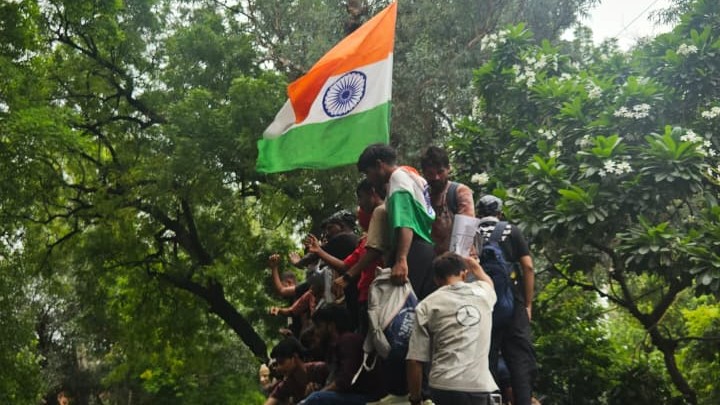
New Delhi, July 26: What began as a social media campaign led by a group of students evolved into one of India’s largest youth-led protest movements in recent years, culminating in the resignation of the Union education minister after weeks of demonstrations over alleged examination irregularities.
The movement, led by the Coackroach Janta Party (CJP), traces its origins to May 2026, when founder Abhijeet Dipke launched the organisation in Boston, United States, following remarks by the Chief Justice of India that drew criticism from sections of students. Dipke returned to India in June amid public outrage over the alleged NEET examination paper leak.
The campaign moved from online platforms to the streets on June 6, when students gathered at Delhi’s Jantar Mantar. By June 20, protesters had begun an indefinite sit-in at the national capital, attracting students from across the country as well as teachers, parents, activists and opposition politicians.
The movement gathered momentum after climate activist Sonam Wangchuk joined the protest on June 28 and began an indefinite hunger strike. He was removed from the protest site by police on July 18, the 21st day of his fast, and taken to Safdarjung Hospital.
DAY 4 UPDATE
— Sonam Wangchuk (@Wangchuk66) July 1, 2026
I’m feeling ok, bit tired though.
Doctor said BP was low, I’ll increase water n salt intake. Sugar level is low at 66 but that’s because of no food for 3 days, as ketosis takes over body starts consuming fats etc. In prolonged fast it may consume muscles & organs… pic.twitter.com/j2ajv6dIj3
Two days later, organisers called for a “Chalo Sansad” march coinciding with the opening of Parliament’s Monsoon Session. The demonstration escalated into clashes with Delhi Police, who used batons and fired tear gas after protesters allegedly turned unruly. Opposition parties voiced support for the students, while coverage by independent media outlets amplified the movement nationally.
On July 22, the Delhi High Court sought an explanation from police over their handling of the protests.
Wangchuk ended his hunger strike at Medanta Hospital on July 23 after meeting Union ministers J.P. Nadda and Jitendra Singh, who later met CJP representatives at Delhi’s Constitutional Club and assured them they would convey the protesters’ demands to the government.
— Dharmendra Pradhan (@dpradhanbjp) July 25, 2026
The protests reached their political climax on July 25, when the Union education minister Dharmendra Pradhan resigned. Pralhad Joshi was subsequently appointed to the portfolio.
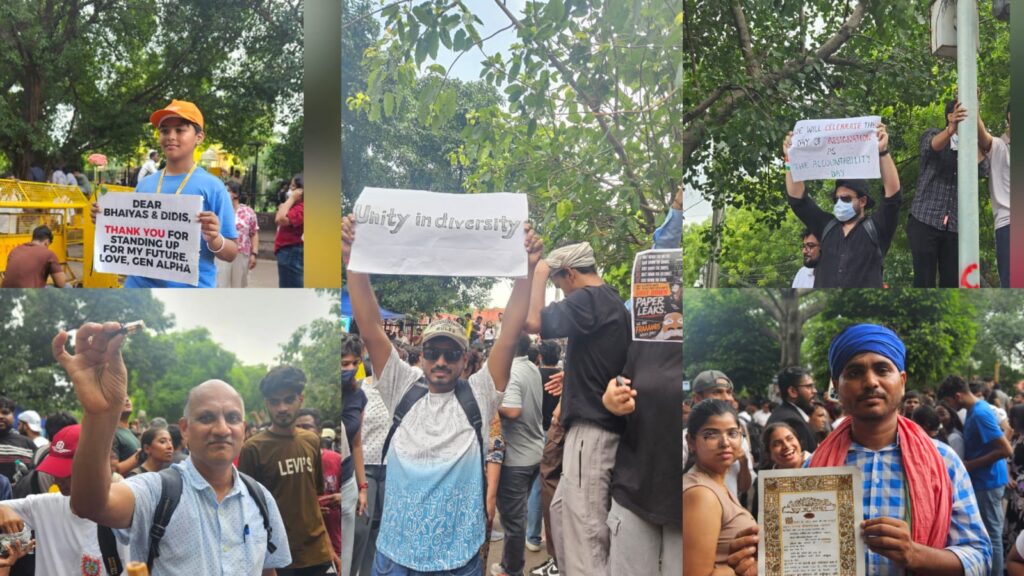
At Jantar Mantar, the resignation triggered celebrations among protesters, who danced, distributed sweets and played with colours, describing the development as an unprecedented victory for a youth-led movement.
“The Indian youth have finally achieved what they were protesting for,” one participant said.
Another protester described the movement as “a campaign that started on social media” and said it had grown into “the country’s largest protest movement in the past 12 years.”
Many demonstrators said the movement’s central demand was accountability rather than personal benefit.
“Their one demand was not for any personal gain—just for the sake of accountability,” one participant said.
Students from science, commerce and arts backgrounds travelled from different parts of the country to join the demonstrations, with organisers saying the protest drew participants from nearly every region of India.
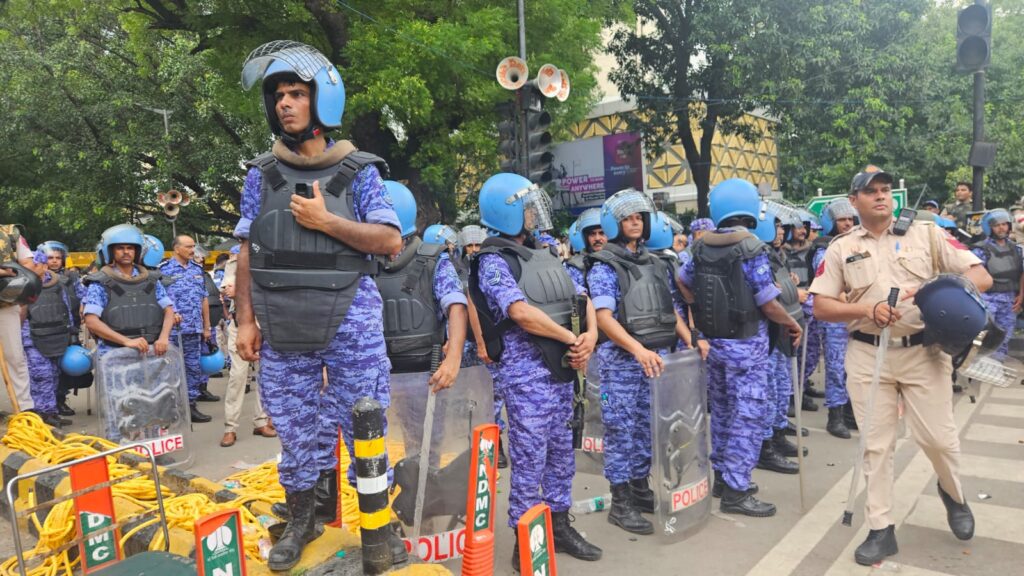
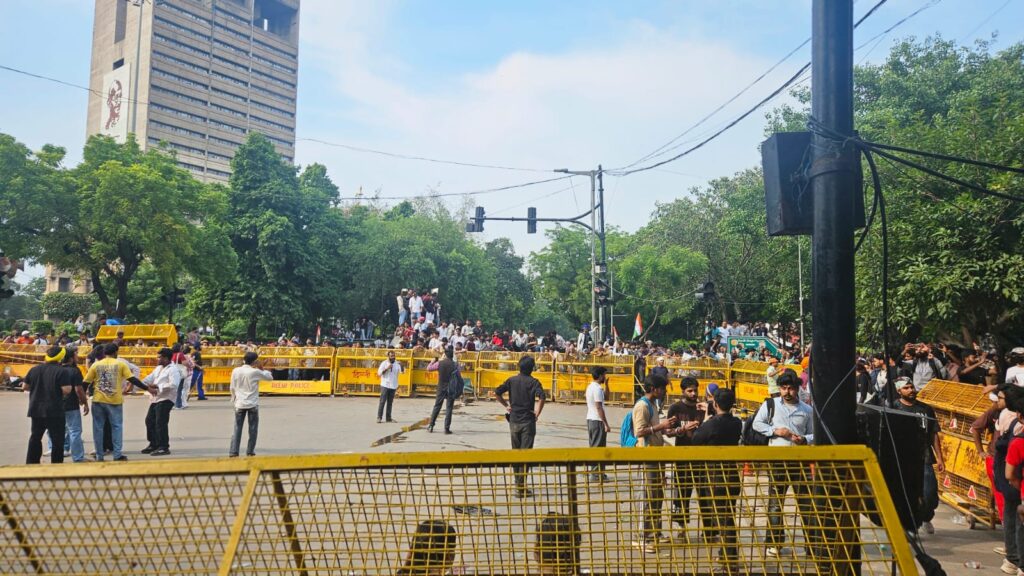
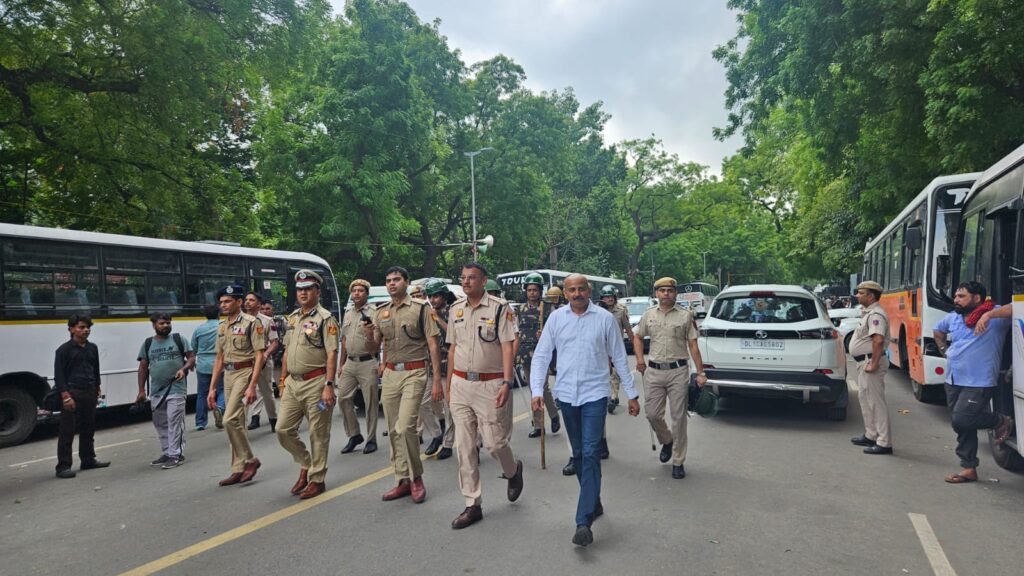
Even after the celebrations began, Delhi Police and Rapid Action Force personnel remained deployed around Jantar Mantar, urging protesters to return home and informing them that metro station entrances had reopened.
The movement also elevated several young organisers into prominent leaders, including founder Abhijeet Dipke (CJP), spokespersons Saurav Das (CJP) and Ashutosh Ranka (CJP), and Delhi organiser Neha Bora (National President of the All India Students’ Association).
Supporters hailed the resignation as a victory for democratic accountability, although some acknowledged that the long-term impact of the movement would become clear only over time.