

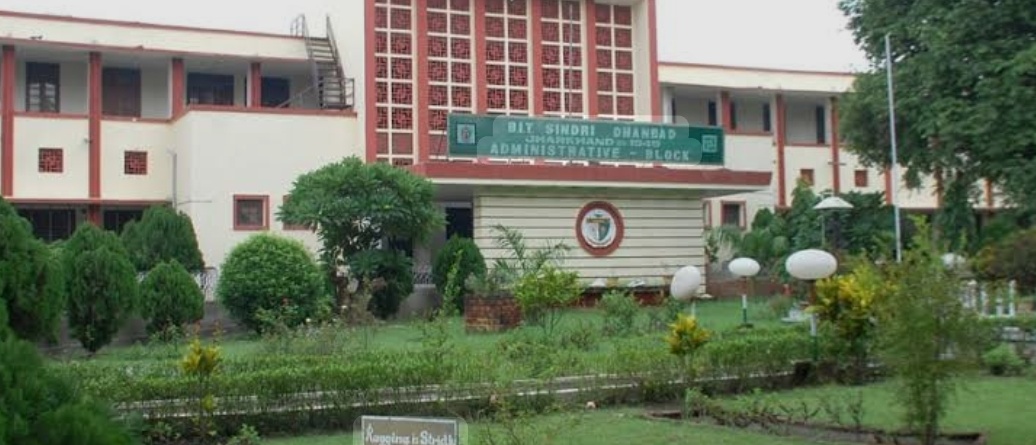
Ranchi, July 14: Jharkhand Chief Minister Hemant Soren has approved a proposal to upgrade the Birsa Institute of Technology (BIT), Sindri, into a Unitary University, marking a significant step towards strengthening technical and higher education in the state.
The decision was taken during a high-level review meeting of the Higher and Technical Education Department, where the Chief Minister directed officials to prepare a detailed proposal and digital presentation for the proposed transformation.
He instructed the department to complete all necessary formalities at the earliest to facilitate the university’s establishment.
As part of the state’s higher education reform, the government also plans to establish new institutions on the lines of the Indian Institutes of Technology (IITs) and National Institutes of Technology (NITs).
The initiative aims to modernise technical education and equip students with skills required for emerging industries.
Officials informed the meeting that the proposed university would introduce advanced academic programmes in Artificial Intelligence (AI), Robotics, Data Science, Internet of Things (IoT), Cyber Security, Semiconductor Technology, Textile Design, Logistics, and other future-oriented disciplines.
The government believes these programmes will improve students’ employability and help meet the growing demand for skilled professionals.
The meeting further decided to bring the Jharkhand Institute of Public Management (JIPM) under the Higher Education Department.
The institute will offer specialised courses in Public Policy, Urban Planning, Master of Planning, and Public Infrastructure Management to strengthen administrative and governance capacities.
The Chief Minister also reviewed the progress of key educational and welfare schemes, including the Student Credit Card Scheme, Savitribai Phule Kishori Samriddhi Yojana, Manki Munda Scholarship Scheme, Eklavya Training Scheme, and other student-centric initiatives.
He directed officials to ensure timely implementation, proper monitoring, and effective delivery of benefits to eligible beneficiaries.
To expand access to technical education, the state government plans to establish technical education clusters across several districts, including Palamu, Giridih, Ramgarh, Gumla, Ranchi, Sahibganj, Deoghar, Pakur, and Simdega.
These clusters are expected to include engineering institutions, polytechnics, and skill development centres to enhance technical education infrastructure across Jharkhand.
Emphasising the importance of future-ready education, the Chief Minister called for integrating advanced technologies such as Artificial Intelligence into academic curricula and urged officials to align technical education with evolving industry requirements.
The state government said the initiative is intended to transform Jharkhand into a leading hub for quality technical education, research, innovation, and skill development while creating better employment opportunities for students.
