

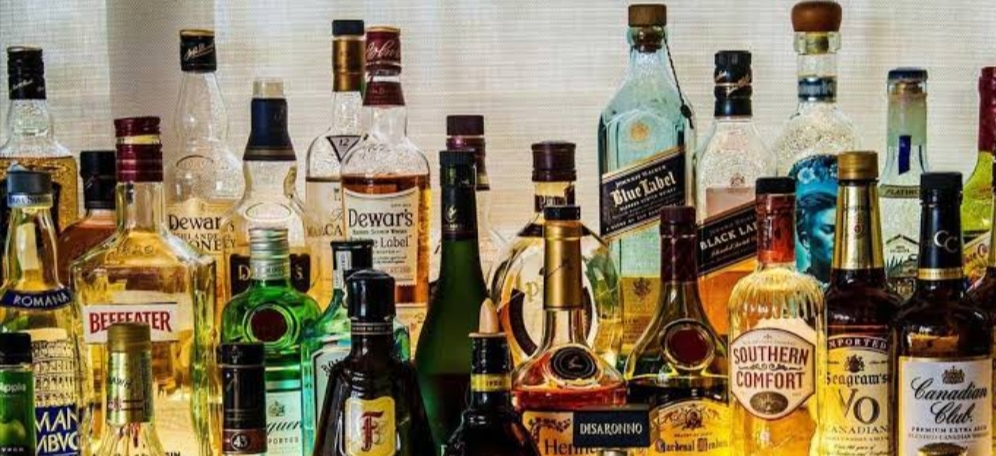
Patna, Aug 11: Bihar’s decade-old prohibition policy has come under renewed scrutiny following a study that highlighted revenue losses, the growth of illicit liquor trade and increased use of alternative intoxicants in the state.The study by the National Council of Applied Economic Research (NCAER) has recommended replacing the complete ban with a regulated liquor market, arguing that the existing policy has not fully achieved some of its stated objectives.
The report, titled “Macro Perspective of Bihar’s Development Achievements: Unfinished Agenda and the Way Forward,” was prepared by a team of economists led by Ratna Sahay. Its findings were presented at the India Policy Forum.
According to the study, the prohibition regime has contributed to the expansion of illegal liquor networks and bootlegging, while some consumers have shifted towards other intoxicating substances.The researchers have also estimated that Bihar loses around 14-15 per cent of its revenue because of prohibition.
They suggested that restoring regulated liquor sales and imposing excise duties could provide additional funds for sectors such as healthcare, education, infrastructure and employment.The findings have triggered a political debate, although the ruling alliance has shown little inclination to withdraw the prohibition policy.
Senior JD(U) leader and MLC Neeraj Kumar on Tuesday rejected the possibility of reviewing the law, saying the prohibition policy introduced during Nitish Kumar’s tenure had brought significant changes to the lives of rural women.The JD(U) has maintained that the focus should remain on continuing the prohibition policy rather than repealing it.Union Minister Chirag Paswan, who heads an NDA ally, has also opposed lifting the ban outright.
While acknowledging the need to increase Bihar’s revenue, he has argued that ending prohibition is not the only way to achieve that objective.Union Minister Jitan Ram Manjhi, meanwhile, has advocated consideration of the Gujarat model, suggesting that Bihar should examine ways of strengthening and streamlining the implementation of prohibition.
The opposition has used the NCAER findings to question the effectiveness of the government’s implementation of the ban. Critics argue that the continuation of illegal liquor sales has resulted in the creation of a parallel black market while depriving the state of legitimate excise revenue.The prohibition policy was introduced in Bihar in 2016 under then Chief Minister Nitish Kumar, with the stated aim of reducing alcohol consumption and addressing social problems, including those affecting women and families.
The debate has now acquired both an economic and political dimension. While researchers have raised questions about the financial and enforcement costs of prohibition, ruling alliance leaders remain cautious about changing a policy that has significant social and political support.For now, the government’s position indicates that Bihar’s liquor ban is likely to remain in place, despite renewed calls for a review and growing discussion over its economic consequences.
The controversy highlights the challenge of balancing Bihar’s social objectives with revenue requirements and the need to tackle illegal liquor markets effectively.
