

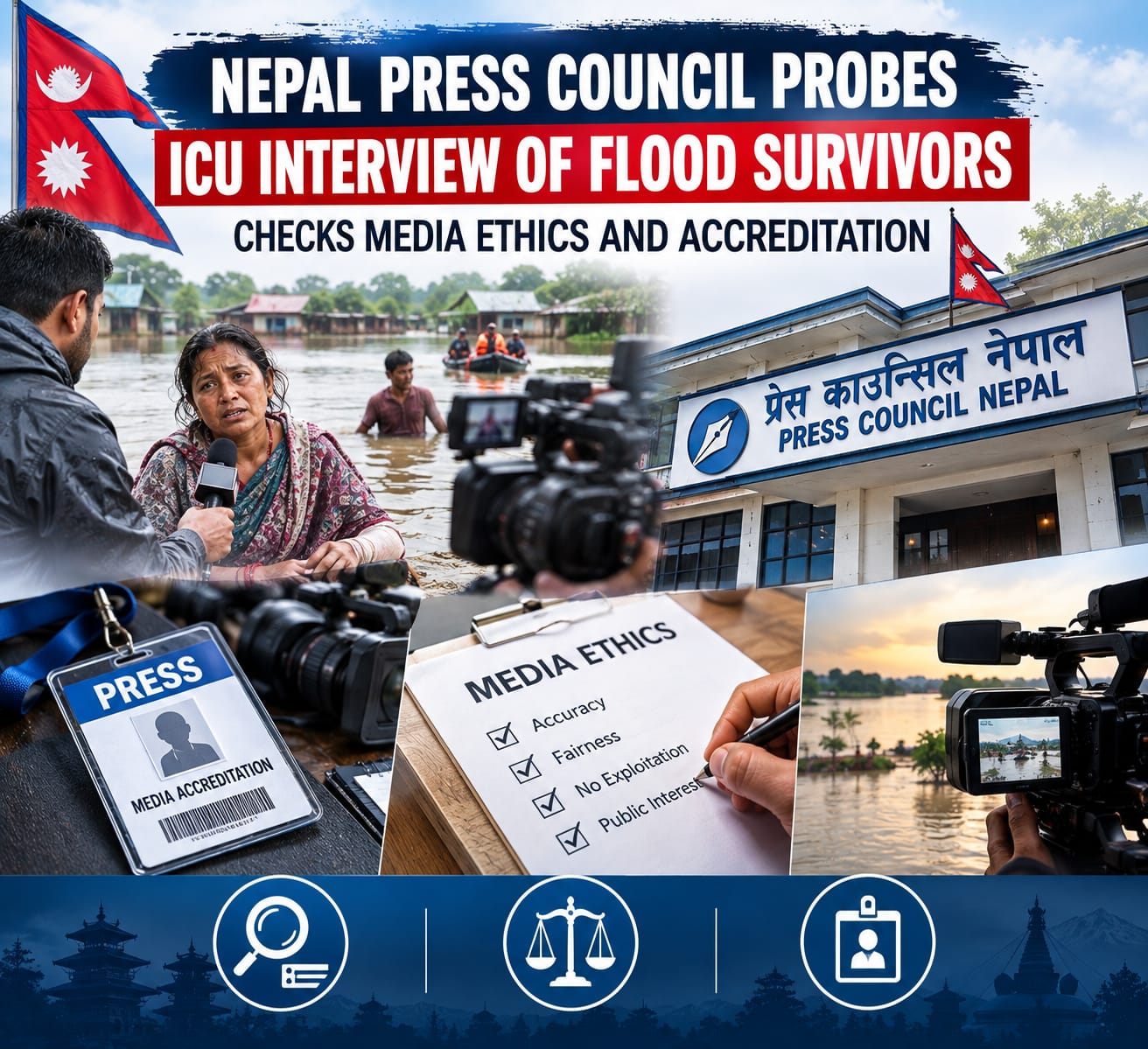
Kathmandu, Sep 15: Nepal’s Press Council has launched a probe into a YouTube interview conducted with flood survivors while they were undergoing treatment in the Intensive Care Unit (ICU) of a hospital in Kathmandu, raising concerns over patient privacy, media ethics and compliance with the Journalists’ Code of Conduct.
The council said it was examining and monitoring a programme broadcast by YouTube channel “Inside the Bunker”, which featured survivors rescued after spending 10 days at the Trishuli III ‘A’ Hydropower Project site in Rasuwa.
The interview was conducted by YouTuber and journalist Suraj Singh Thakuri along with his camera team after the survivors were brought to the hospital in Kathmandu’s Chhauni area for treatment.
The programme drew criticism in local media and on social media, prompting the Press Council to examine whether the broadcast followed established journalistic and ethical norms.
“We have sent letters to the Medical Council as well as the concerned hospital in this regard,” Deepak Khanal, a senior official at Press Council Nepal, told PTI.
“The Press Council is conducting further study and monitoring of such content to ensure compliance with the Journalists’ Code of Conduct,” Khanal said.
The council is also checking whether the concerned YouTuber possessed a valid press accreditation card.
“We are also inquiring whether the concerned YouTuber possesses a valid press accreditation card or not,” Khanal said.
The probe comes against the backdrop of a devastating flood disaster in Nepal. Flash floods triggered by an ice-rock avalanche near the Nepal-Tibet border on August 26 devastated several areas in northern and central Nepal.
Around 1,400 people were killed and more than 5,000 remain missing, while floodwaters carried away homes, vehicles, roads and bridges and damaged hydropower projects.
The Press Council’s inquiry is currently focused on the ICU interview, with authorities examining the broadcast, seeking information from medical authorities and determining whether the journalist involved had the required press accreditation.
The case has brought renewed attention to the balance between disaster reporting and the privacy, dignity and medical condition of survivors receiving treatment.
