

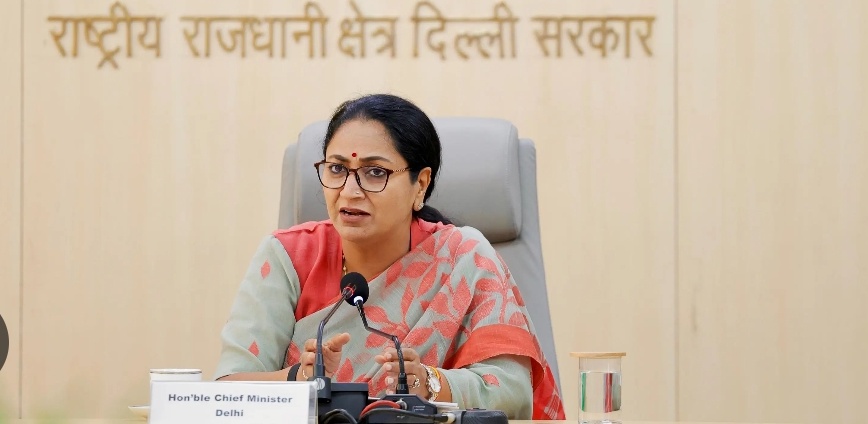
New Delhi, August 25: Delhi Chief Minister Rekha Gupta has called an emergency review meeting following a rise in seasonal influenza cases in the national capital, with health authorities reporting around 3,000 influenza infections this year, including 2,308 H1N1 cases.
Delhi Health Minister Pankaj Kumar Singh said on Tuesday that the government is closely monitoring the situation and has reviewed the preparedness of hospitals and other health agencies.Singh said there was no shortage of doctors, healthcare staff or medicines and urged people not to panic. He said patients were receiving treatment and being discharged after recovery.
The review meeting involved senior officials from the Health Department, Municipal Corporation of Delhi, New Delhi Municipal Council and Delhi Cantonment Board. Preparedness for seasonal influenza, including H1N1, as well as vector-borne diseases was discussed.H1N1 accounts for the majority of influenza infections reported in the city this year. The remaining cases involve other influenza strains.
The Health Minister said isolation facilities have been established in hospitals to manage patients requiring separate care. He also warned that action would be taken if a hospital failed to provide a bed to a patient who required admission.
H1N1, commonly referred to as swine flu, is a type of Influenza A virus. Typical symptoms include fever, cough, sore throat, headache, body aches and fatigue. Some patients may develop more serious respiratory complications.
Health authorities have advised people to seek medical attention if they develop persistent high fever, breathing difficulties, chest pain, confusion or worsening symptoms.
The government is also reviewing preparations for vector-borne diseases such as dengue, malaria and chikungunya, which remain public health concerns in Delhi.Officials have appealed to residents to remain vigilant while avoiding unnecessary panic.
Basic precautions, including hand hygiene, avoiding close contact with sick individuals and seeking timely medical care when symptoms become severe, can help reduce the risk of complications and transmission.
The latest review comes amid growing influenza activity in Delhi and is aimed at ensuring that hospitals and health agencies are equipped to handle any further increase in cases.
