

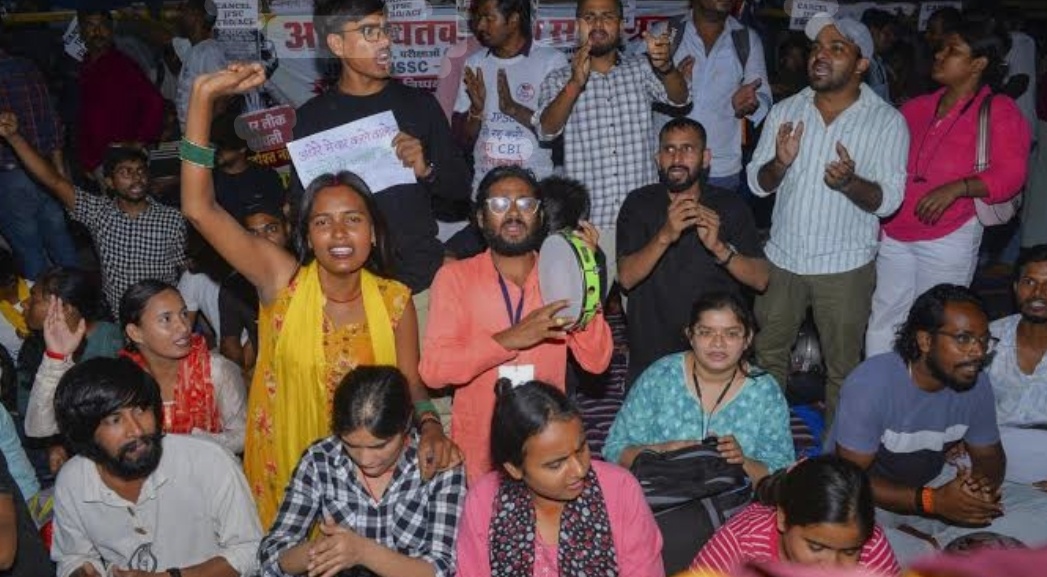
Ranchi, Aug 22: The ongoing debate over recruitment examinations in Jharkhand is increasingly highlighting the personal and economic challenges faced by women preparing for government jobs, particularly those from rural and financially constrained families.The protests over alleged irregularities in examinations conducted by the Jharkhand Public Service Commission (JPSC) and Jharkhand Staff Selection Commission (JSSC) have brought hundreds of candidates onto the streets in recent months.
For many aspirants, government employment represents more than a career opportunity. It is seen as a route to financial stability, independence and the ability to support their families.Among those who participated in the protests was 28-year-old Sarita Kumari, who has been preparing for JPSC and JSSC examinations since 2019. Her father, a farmer, has been supporting her studies in Ranchi with a monthly contribution of around Rs 6,000.
The prolonged preparation has placed a financial and emotional burden on the family. Sarita has also spoken about making personal sacrifices to continue her studies while ensuring that her father, who lives in the village, has family support.She was among the candidates who participated in a hunger strike at Jaipal Singh Munda Stadium in Ranchi during July and August.
The protest brought together students demanding action over alleged irregularities in recruitment examinations.The protesters have called for cancellation of examinations they believe were compromised, an independent Central Bureau of Investigation (CBI) probe and reforms aimed at making the recruitment process more transparent.The agitation has also raised concerns about the impact of prolonged recruitment uncertainty on women.
For aspirants from rural backgrounds, a government job can provide a stable income and greater financial independence, while also enabling them to contribute to their families.Candidates say repeated reports of alleged examination irregularities, investigations and arrests have weakened their confidence in the recruitment system.
They argue that a transparent and credible examination process is essential for protecting the time, money and effort invested by thousands of aspirants.The controversy therefore extends beyond examination results.
For many candidates, particularly women from less-privileged backgrounds, the outcome of the recruitment process could influence their economic security, family responsibilities and future opportunities.The allegations surrounding the examinations remain subject to investigation, while candidates continue to demand a recruitment system they can trust.
