Washington, May 9– U.S. Vice President JD Vance said on Wednesday that Russia is seeking excessive concessions in ceasefire negotiations with Ukraine, in the latest sign of Washington’s growing frustration over stalled efforts to end the war.
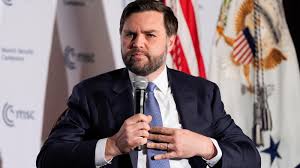
Speaking at a high-level security conference in Washington, Vance told an audience of military and diplomatic leaders that while Moscow has not entirely dismissed the possibility of a resolution, its current demands are unreasonable.
“I wouldn’t say that the Russians are uninterested in bringing this thing to a resolution,” Vance said during an interview with Munich Security Council President Wolfgang Ischinger. “What I would say is, right now, the Russians are asking for a certain set of requirements, a certain set of concessions in order to end the conflict. We think they’re asking for too much.”
President Donald Trump, when asked about the comments, responded, “It’s possible that’s right,” adding, “I’m not happy about it.”
The remarks underscore mounting impatience within the U.S. administration as multiple rounds of diplomacy have failed to produce meaningful progress. Steve Witkoff, Trump’s envoy, has held at least four direct meetings with Russian President Vladimir Putin in recent months, but U.S. officials say Moscow has offered no significant concessions.
Vance reiterated the administration’s stance that the United States is prepared to walk away from the talks if it sees no forward movement.
“We would like both the Russians and the Ukrainians to actually agree on some basic guidelines for sitting down and talking to one another,” he said. “Obviously, the United States is happy to participate, but the next big step is for the two sides to engage directly.”
Last month, Trump warned Russia of secondary sanctions after renewed missile attacks on Kyiv and other Ukrainian cities. “It makes me think that maybe [Putin] doesn’t want to stop the war,” Trump said at the time. “He’s just tapping me along.” Russia has maintained a hardline negotiating position, including calls for a rollback of NATO deployments, limits on Ukraine’s defense capabilities, and greater influence over Ukraine’s domestic affairs.
In an interview last week, Russian Foreign Minister Sergei Lavrov pointed to NATO’s proximity and alleged discrimination against Russian-speaking minorities in Ukraine as the “root causes” of the conflict.
Former President Joe Biden criticized the Trump administration’s handling of the war, calling it “modern-day appeasement” and dismissing the idea that territorial concessions by Ukraine could lead to a durable peace.
The White House says it remains committed to facilitating dialogue, but the path forward remains uncertain as both sides hold firm to opposing positions.