

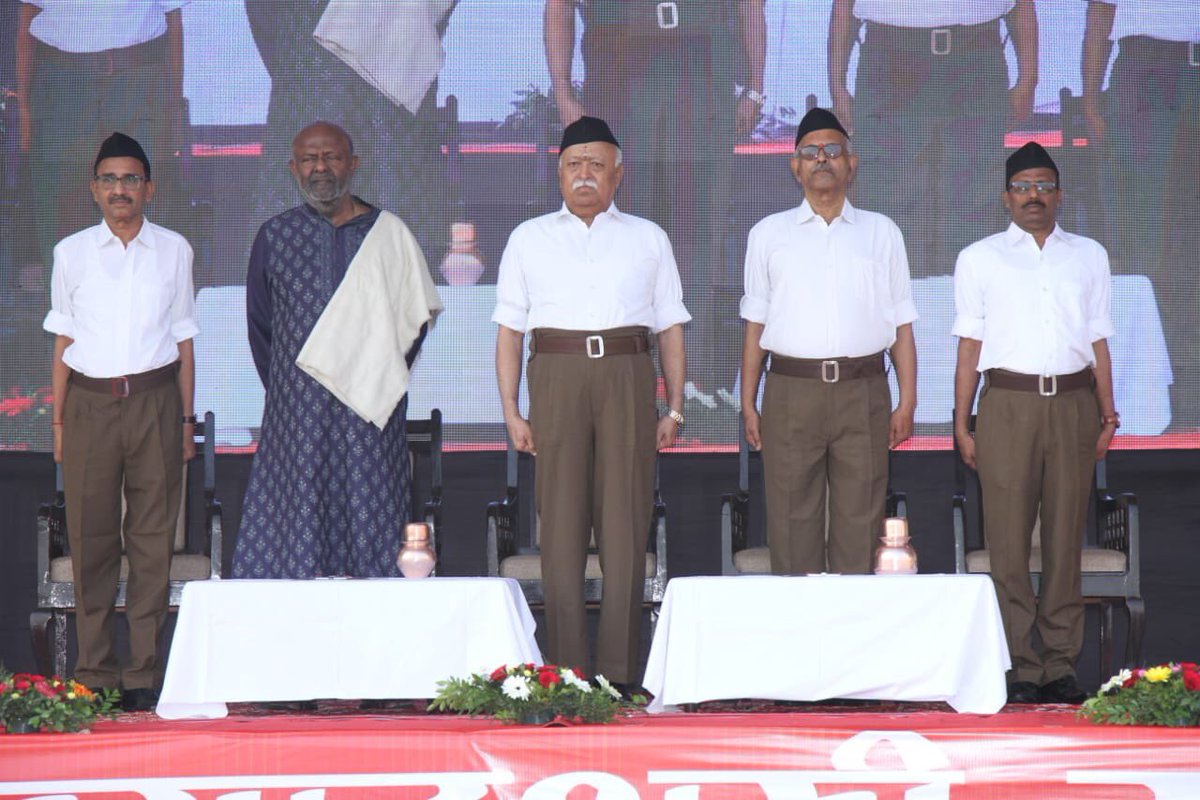
New Delhi, October 2: The Rashtriya Swayamsevak Sangh (RSS), the ideological parent of India’s ruling Bharatiya Janata Party (BJP), is marking its centenary this year. Prime Minister Narendra Modi, himself a former RSS pracharak (full-time volunteer), visited its Nagpur headquarters in March 2025, becoming the first sitting prime minister to do so.
The organisation was founded on Vijaya Dashami in 1925 by Keshav Baliram Hedgewar, a physician from Nagpur, with the aim of building a “Hindu Rashtra” through cultural and religious revival. What began as a single shakha (local branch) has grown into a vast network of more than 127,000 shakhas in over 51,000 locations across India.
The RSS describes itself as a cultural organisation devoted to preserving India’s “immortal culture,” but its critics see it as a Hindu nationalist body seeking to reshape the country’s secular foundations. It has been banned three times in independent India – after Mahatma Gandhi’s assassination in 1948, during the Emergency (1975–77), and briefly after the demolition of the Babri Masjid in 1992.
Between 1925 and 1966, the RSS laid the foundation for its grassroots expansion, creating a cadre of swayamsevaks (volunteers) who later played a central role in shaping Hindu nationalist politics. Its influence today extends well beyond politics, touching education, labour unions, and social organisations.
