

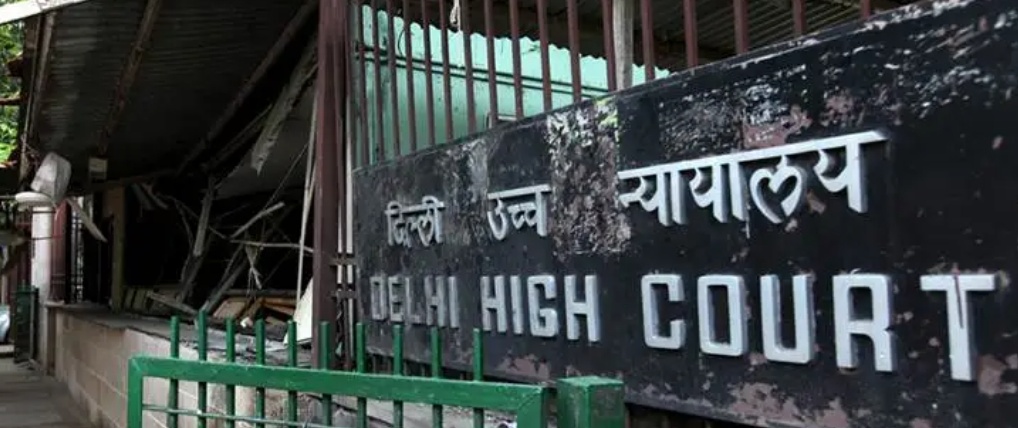
New Delhi, July 27: The Delhi High Court has directed the Municipal Corporation of Delhi (MCD) to identify an alternative vending site within four weeks for a street vendor with a locomotor disability, while observing that the rights of commuters to safe and unobstructed access to metro stations must be balanced with the livelihood rights of authorised vendors.
A Division Bench of Justices Prathiba M. Singh and Vikas Mahajan passed the direction while hearing an application seeking implementation of an earlier court order that had asked civic authorities to relocate the vendor instead of displacing him without an alternative arrangement.
The petitioner, who holds a valid Certificate of Vending and has a 40 percent locomotor disability, had been operating near the Old Bus Adda at Sarai Kale Khan before being removed during an anti-encroachment drive linked to the redevelopment of the Sarai Kale Khan transit hub and Regional Rapid Transit System (RRTS) project.
The court observed that authorities must protect pedestrian movement and ensure safe access to public transport facilities, while also safeguarding the livelihood of authorised street vendors.
It said vending spaces should be identified only for vendors holding valid or provisional Certificates of Vending and should be regulated through appropriate conditions.During the hearing, the court took note of official records indicating that congestion caused by encroachments around the Sarai Kale Khan Namo Bharat station-cum-transit hub has affected pedestrian movement and commuter access.
It also noted that authorities are implementing measures to improve safety and manage public spaces around the transport hub.Referring to recent legal developments recognising the importance of safe walking spaces for pedestrians, the bench said civic authorities must strike a balance between public convenience and the rights of vendors.
Granting additional time, the High Court directed the Assistant Commissioner of the MCD to identify a suitable alternative location for the petitioner within four weeks. It also clarified that ongoing anti-encroachment and public infrastructure activities should not be obstructed during the process.The matter will remain subject to further compliance before the court.
