

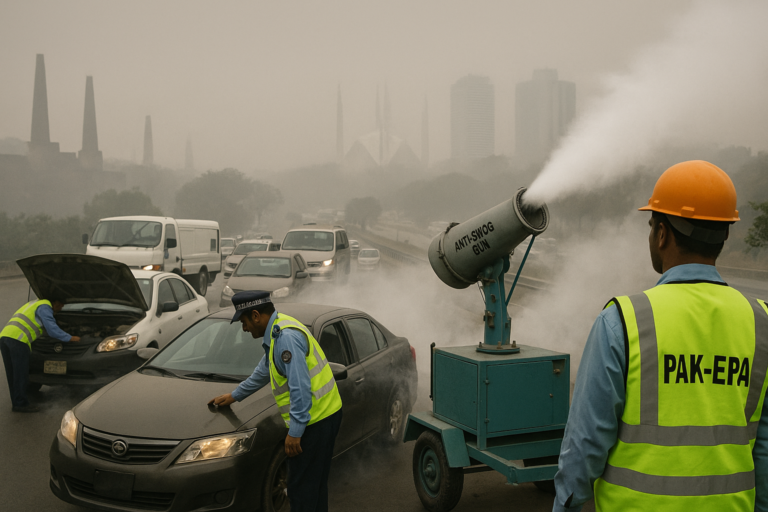
Islamabad , Dec 15: Authorities in Pakistan’s capital have intensified vehicle inspections and enforcement measures as winter smog worsens, with atmospheric inversions trapping pollutants close to the ground and pushing air quality to hazardous level.
Checkpoints established across Islamabad in December form part of a broader government crackdown aimed at curbing rising pollution, particularly emissions from older and poorly maintained vehicles. Officials say transport remains the single largest contributor to the city’s deteriorating air quality.
According to environmental data, vehicle emissions account for 53 per cent of Islamabad’s PM2.5 pollution, making road traffic the primary driver of smog. The capital recorded seven “very unhealthy” air quality days in December, with PM2.5 concentrations exceeding 150 micrograms per cubic metre.
Annual pollution figures underline the scale of the problem. Islamabad’s average PM2.5 level in 2024 stood at 52.3 micrograms per cubic metre, more than ten times higher than the 5 micrograms recommended by the World Health Organization.
Enforcement actions have intensified in response. Authorities say more than 300 fines have been issued at inspection points during the first week of the crackdown, while around 80 vehicles have been impounded for failing emissions standards.
Environmental officials have warned that non-compliant vehicles will be denied entry into the capital if owners fail to address excessive emissions. Technicians stationed at checkpoints are testing exhaust output, particularly from aging diesel-powered trucks and cars.
While Islamabad was originally designed as a planned and green capital, experts say its heavy dependence on private vehicles and the continued use of older models have turned air pollution into a largely self-inflicted crisis.
Residents are increasingly reporting health impacts linked to the worsening smog, including respiratory problems and allergies. Some have expressed concern that enforcement alone may not be enough without long-term reforms in public transport and urban planning.
“I feel uneasy when I think about what I will say if my daughter asks for clean air — that is her basic right,” said anthropologist Sulaman Ijaz, reflecting growing public anxiety over the capital’s environmental future.
