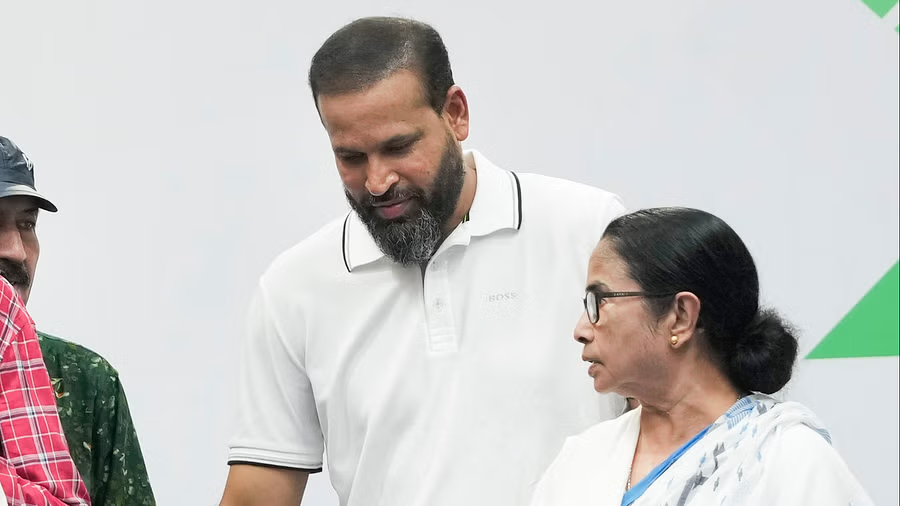
New Delhi, May 20 – India’s Trinamool Congress (TMC) said on Sunday it will not participate in any government-led foreign delegations aimed at countering Pakistan’s cross-border terrorism narrative, citing lack of consultation over the selection of its representative.
The Mamata Banerjee-led party objected to the central government’s move to include cricketer-turned-parliamentarian Yusuf Pathan in a multi-party delegation without consulting TMC leadership, party sources said.
“Neither Yusuf Pathan nor any other TMC MP will be part of such delegations,” a senior party leader said, adding that foreign policy remains the sole domain of the Union government. “Let the Union government take full responsibility for it.”
The Ministry of External Affairs is sending multiple parliamentary delegations to 32 countries and the European Union as part of a diplomatic outreach following the recent attack in Pahalgam, Jammu and Kashmir. Fifty-nine people, including eight retired diplomats, have been selected for the global campaign.
Pathan was named as a member of a group led by Janata Dal (United) MP Sanjay Jha that is scheduled to visit Indonesia, Malaysia, South Korea and Singapore. The government reportedly included Pathan after TMC’s floor leader Sudip Bandopadhyay expressed his inability to travel due to ill health.
TMC General Secretary Abhishek Banerjee said the party had not politicised the issue of national security but took exception to the ruling Bharatiya Janata Party (BJP) nominating its representative.
“How can the Union Government decide who will represent Trinamool? There should have been prior consultation with the party,” Banerjee told reporters in Kolkata. The government’s move has also drawn criticism from the opposition Congress party, which accused the Modi administration of rejecting three of its four recommended names and instead including leaders of its own choosing.
Congress described the selection process as “dishonest” and said the government appeared to have made its decisions even before holding any discussions with opposition parties. The diplomatic campaign comes amid renewed efforts by India to isolate Pakistan on the international stage over its alleged support for terrorism, following recent violence in the Kashmir Valley.