

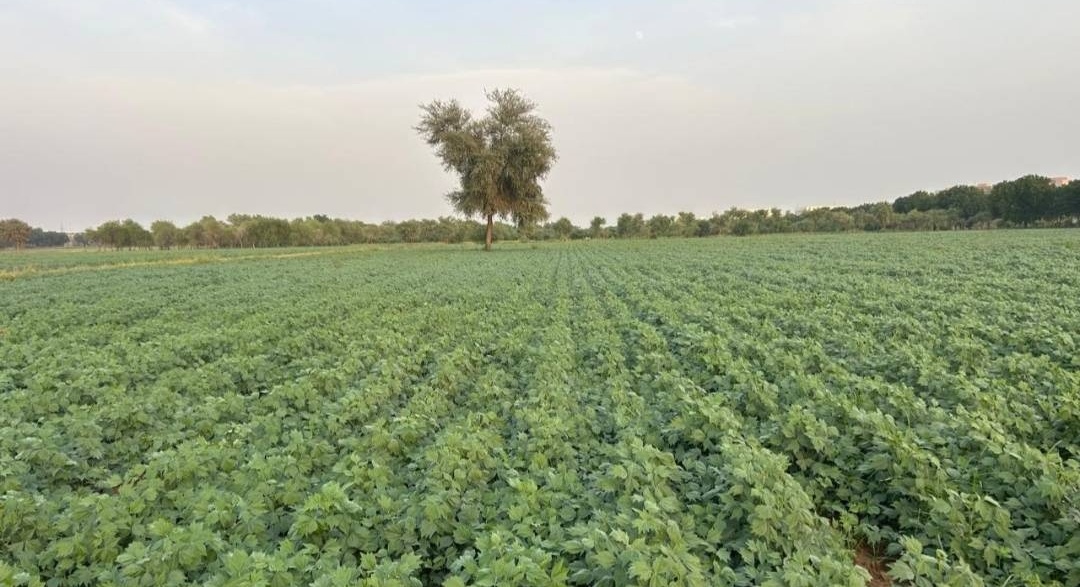
New Delhi, September 13: Four moth bean varieties developed by the Central Arid Zone Research Institute (CAZRI), Jodhpur, have demonstrated strong drought tolerance during the Kharif 2026 season, surviving a prolonged period of rainfall deficiency in western Rajasthan.
The varieties — CAZRI Moth-4, CAZRI Moth-5, CAZRI Moth-6 and CAZRI Moth-7 — have been developed through a long-term breeding and genetic improvement programme aimed at producing crops suited to the harsh and unpredictable conditions of arid regions.
Moth bean is an important pulse crop in western Rajasthan and is cultivated across nearly 10 lakh hectares. However, average productivity remains around 350 kg per hectare due to low and erratic rainfall, extended dry periods and severe soil moisture stress.During the 2026 crop season, the CAZRI varieties faced a particularly challenging period after rainfall declined sharply following early August.
The crop experienced an approximately 35-day dry spell between early August and early September, coinciding with important stages such as flowering, pod formation and grain development.
According to the agricultural research findings, total evaporation during the crop cycle was around 317 mm, while approximately 180 mm of evaporation occurred during the prolonged dry period alone.
Despite the moisture stress, the plants maintained healthy growth and continued producing pods. Researchers attributed the performance to the varieties’ ability to make efficient use of available soil moisture and adjust their growth according to changing environmental conditions.
Soil moisture in the upper 0–10 cm layer declined substantially after the last significant rainfall, falling from around 15–16 per cent to about 5–6 per cent. However, moisture in the deeper 10–40 cm layer remained relatively higher, declining from around 23 per cent to 16 per cent, providing continued access to water for the crop.
Researchers said the varieties’ early development, suitable leaf growth and ability to maintain moisture around the root zone helped the plants withstand the extended dry spell.Agronomic practices also contributed to the successful performance.
The crop was sown in a timely manner after the onset of the monsoon, with a spacing of around 45 cm by 10 cm. Mechanical cultivation, weed management and moisture-conservation measures were also adopted to improve the use of available water.
The experimental fields had relatively low fertility, with organic carbon levels of 0.13–0.18 per cent and a soil pH of 7.9–8.1. Despite these limitations, the varieties maintained satisfactory growth under the prevailing conditions.
A key characteristic of the four varieties is their developmental plasticity, which enables plants to modify their growth and maturity according to soil moisture availability.
The varieties can begin reproductive development at an early stage, helping them utilise available moisture before severe drought conditions intensify.CAZRI has also started expanding seed production of these varieties. For 2026, demand for around 23.32 quintals of seed was received through the SATHI portal, with production currently being undertaken on seven hectares of the institute’s research farm.
The varieties had also attracted demand in 2025, when around 63.2 quintals of seed was sought through the portal. The institute said breeder seed can be multiplied substantially to produce certified seed, potentially allowing the improved varieties to reach a much larger area under moth bean cultivation.
Seed multiplication is being undertaken by organisations including the Rajasthan State Seeds Corporation, National Seeds Corporation and selected private seed companies.
ICAR Director General and DARE Secretary Dr M. L. Jat described moth bean as an important crop of the Thar Desert and said climate-resilient varieties could contribute to higher farm incomes and greater self-reliance in pulses.
He also emphasised that improved genetics must be supported by appropriate agricultural practices, including timely sowing, suitable plant populations, weed control and moisture conservation.
The performance of the four CAZRI varieties during Kharif 2026 highlights the potential of crop breeding and improved farm management to strengthen agricultural resilience in drought-prone regions, particularly where farming remains heavily dependent on uncertain rainfall.
