

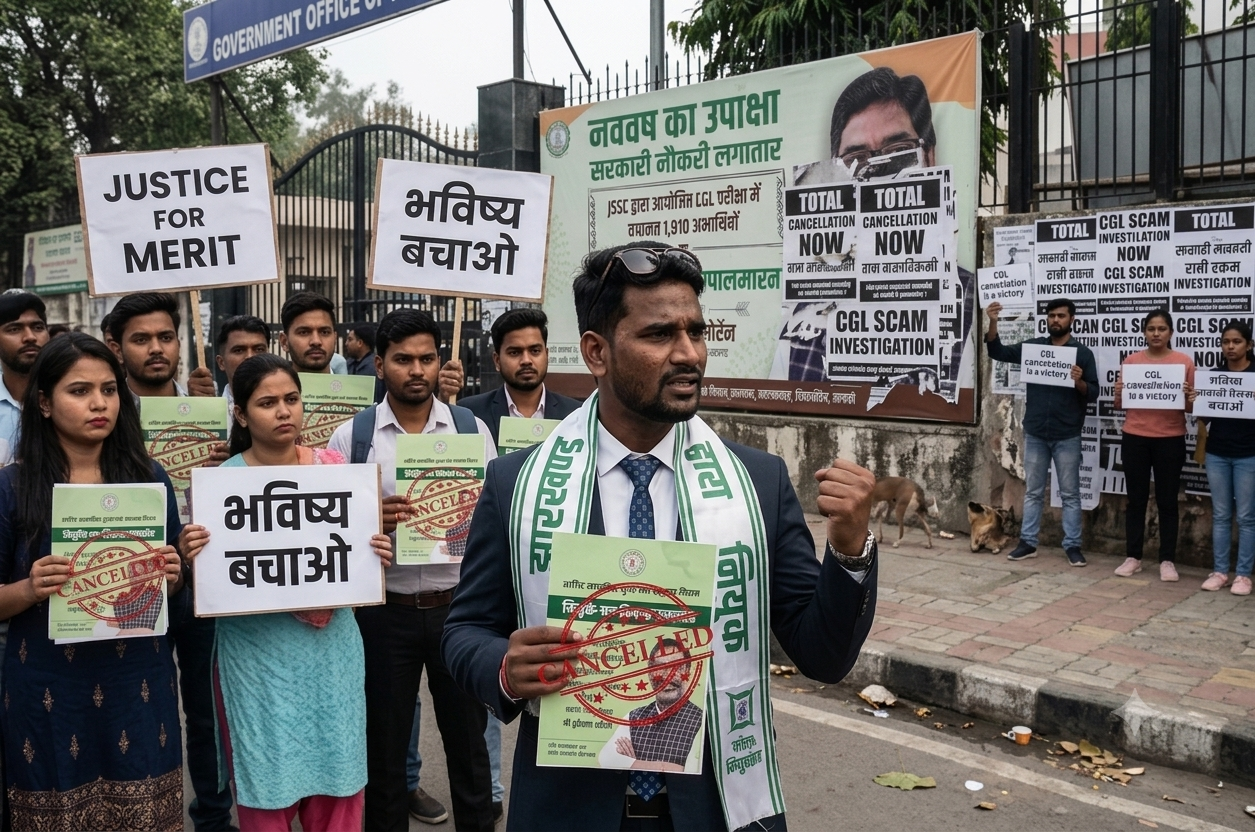
Ranchi, August 19: The Jharkhand government’s decision to cancel the JSSC Combined Graduate Level (JSSC-CGL) examination has triggered a fresh wave of protests, this time from candidates who had successfully cleared the exam and were appointed to government posts.
The development came after the Hemant Soren-led government accepted key demands of students protesting against alleged irregularities in recruitment examinations. The JSSC-CGL examination, conducted in 2024, was among the exams cancelled by the government.
For candidates who had already received appointment letters and joined government departments, the decision has brought uncertainty over their jobs and future careers.
Vivek Kumar, who was working with the Water Resources Department, said he had spent nearly a decade preparing for government recruitment examinations before finally securing a job. He was among more than 1,900 candidates who received appointment letters in December 2025 at an event organised by the Jharkhand government in Ranchi.
According to Kumar, the candidates were selected through the prescribed examination process and were given appointment letters after clearing the JSSC-CGL examination. He questioned why candidates who had successfully completed the selection process should face the consequences if irregularities were allegedly committed by others.
The cancellation of the examination has also led appointed candidates to begin a fresh round of protests outside government offices in Ranchi. They have demanded clarity from the government regarding their appointments and have urged authorities to protect the careers of candidates who cleared the examination on merit.
The controversy centres on allegations of irregularities in Jharkhand’s recruitment examination system. Student protesters had demanded strong action against those responsible and sought investigations into several examinations.
The government has cancelled 22 recruitment examinations and ordered investigations into a larger number of exams. The move was welcomed by protesting students, who described it as a major step towards addressing alleged corruption and malpractice in the recruitment process.
However, the decision has created a conflict between two groups of candidates — those demanding cancellation of allegedly tainted examinations and those who cleared the exams and fear losing their jobs.
The affected candidates argue that if wrongdoing is established, responsibility should be fixed on those involved rather than penalising successful candidates who followed the recruitment process.
The dispute is now likely to move into the legal and administrative arena, with affected candidates seeking clarity and relief over their appointments. The government faces the difficult task of addressing allegations of examination irregularities while also protecting the interests of candidates whose selections and careers are now under question.
