

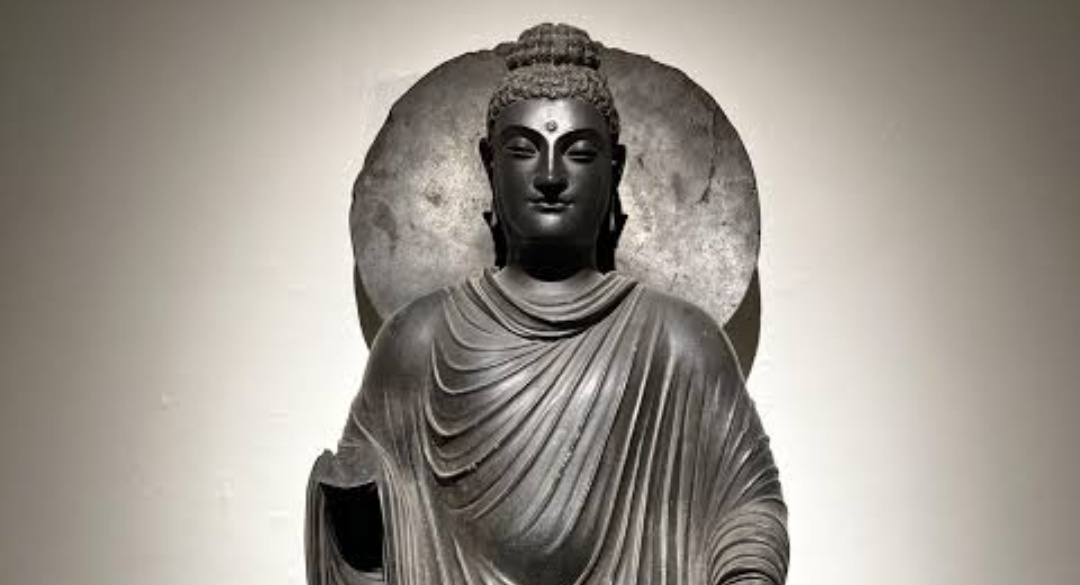
Patna, Aug 11: The Bihar government has initiated efforts to seek the return of the historic Sultanganj Buddha, an ancient copper sculpture discovered in Bhagalpur district in the 19th century and currently housed at the Birmingham Museum and Art Gallery in the United Kingdom.Chief Minister Samrat Choudhary has written to Union Culture Minister Gajendra Singh Shekhawat, requesting the Centre to initiate the process for the statue’s repatriation to India.
The letter, sent in July, highlighted the historical and cultural significance of the sculpture, which is believed to date to the sixth or seventh century AD.Officials associated with the Bihar Heritage Development Society said the Sultanganj Buddha is among the most significant surviving examples of early Indian metal sculpture.
The over-life-size statue stands about 2.3 metres tall, is approximately one metre wide and weighs more than 500 kg.The sculpture depicts the Buddha standing with his right hand raised in the Abhaya Mudra, traditionally associated with protection and fearlessness. His left hand is extended outward, while the folds of his robe are prominently represented.
The statue was reportedly discovered in 1861 during excavation work linked to the construction of a railway station at Sultanganj. Historical records indicate that it was subsequently transported to Birmingham during the British colonial period and later became part of the city’s museum collection.
The Bihar government is also planning a wider exercise to identify antiquities originating from the state that are currently held by museums and institutions overseas.According to officials, information is being collected from museums in countries including the UK, Germany and Russia.
An expert team is being constituted to examine the records and accelerate efforts to trace Bihar’s cultural artefacts abroad.The Sultanganj Buddha was created using the ancient lost-wax casting technique, known as cire perdue, in which a wax model is used to create a mould into which molten metal is subsequently poured.
The sculpture’s internal clay core contains rice husks, allowing scientists to use radiocarbon dating to help establish its age.Bihar’s initiative comes amid India’s broader efforts to secure the return of antiquities taken out of the country.
Several historical objects have been repatriated to India in recent years through diplomatic and legal channels.The state government hopes that the Sultanganj Buddha will also eventually return to Bihar, although officials acknowledge that the process will require sustained engagement between Indian and British authorities.
The move marks the beginning of a broader state-level effort to trace, document and seek the repatriation of Bihar’s cultural heritage held overseas.
