

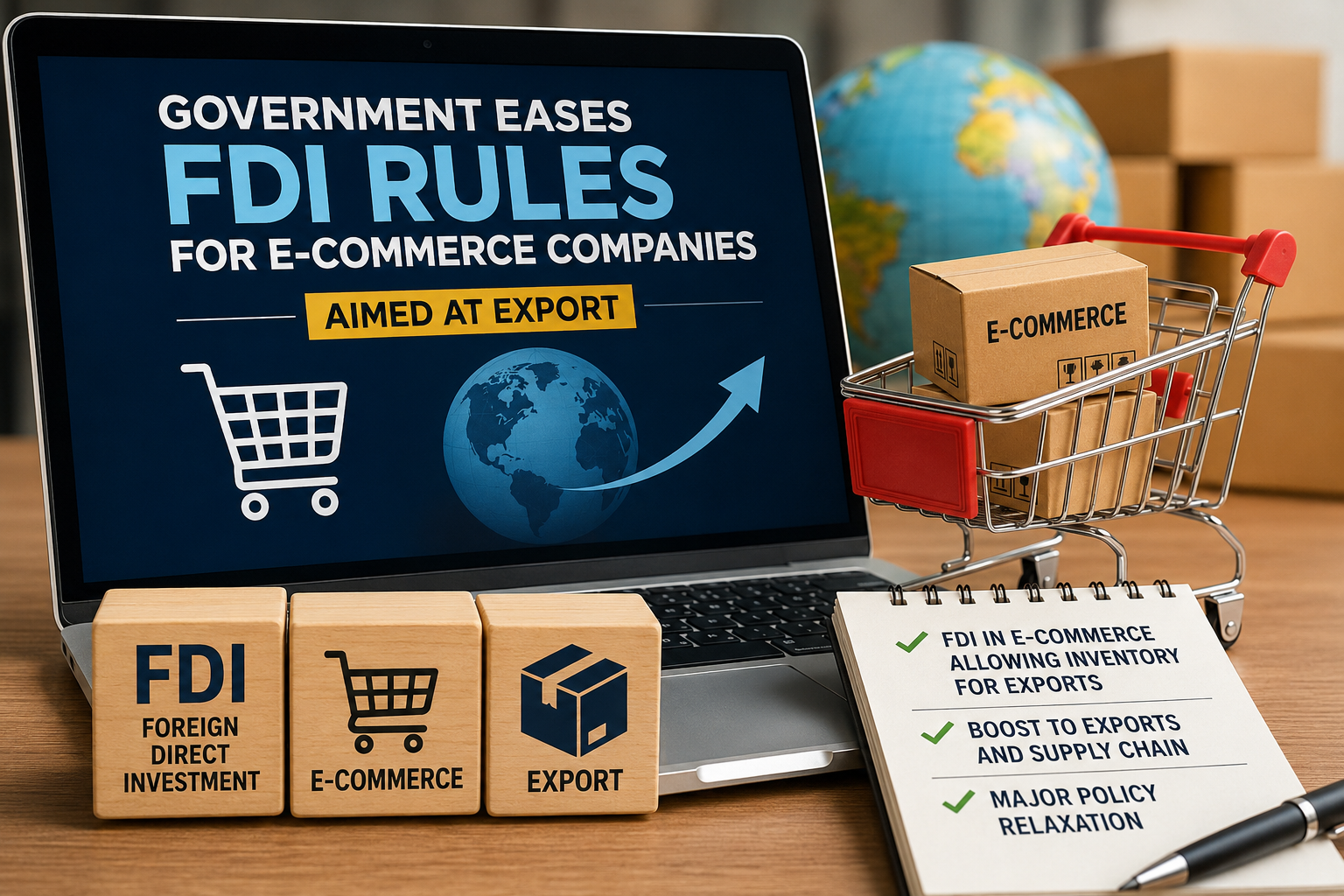
New Delhi, July 23 : In a major policy shift, the Government of India has proposed easing foreign direct investment (FDI) rules for e-commerce companies by allowing foreign-owned firms to hold inventory for export purposes. The move marks one of the most significant relaxations in India’s FDI policy for the e-commerce sector in nearly a decade.
Under the proposed framework, foreign-funded e-commerce companies will be permitted to own and maintain inventory, provided the goods are meant exclusively for exports. Until now, India has allowed FDI only in business-to-business (B2B) e-commerce and marketplace models, where companies merely connect buyers and sellers without owning inventory.
The existing policy was introduced to safeguard small retailers and maintain the government’s long-standing restriction on FDI in multi-brand retail. By limiting foreign-funded e-commerce firms to marketplace operations, policymakers sought to prevent large overseas companies from directly competing with domestic traders through inventory-led retail.
The proposed relaxation is aimed at strengthening India’s export ecosystem, improving supply chain efficiency and attracting greater foreign investment into export-oriented businesses. Officials believe the move could help India expand its presence in global e-commerce exports while supporting manufacturing and logistics.
Trade experts have offered mixed reactions to the proposal. Some welcomed the clarification, saying it removes regulatory ambiguity and creates a more investor-friendly environment for export-focused businesses. Others, however, cautioned that the policy could primarily benefit global e-commerce giants such as Amazon and other foreign-funded companies, potentially affecting the competitiveness of India’s small traders over time.
Industry stakeholders are expected to closely examine the proposal before its implementation, as it represents a notable shift in India’s approach to balancing foreign investment with the protection of domestic retail interests. If approved, the revised rules could reshape the country’s export-oriented e-commerce landscape while opening new opportunities for global investors.
