

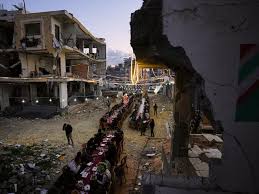
Gaza, Mar 28: The fragile ceasefire in Gaza is showing signs of strain as diplomatic momentum slows and global attention shifts toward the escalating Iran crisis, raising fresh doubts about the viability of a long-term peace framework backed by Donald Trump.
Nearly six months after hostilities were paused, conditions on the ground remain dire. Residents report rising prices and renewed shortages of essential goods, with supply disruptions linked to the wider regional conflict. “Prices have doubled… goods aren’t coming in like before,” said one Gaza resident, reflecting growing frustration that the enclave is being overshadowed by larger geopolitical tensions.
Humanitarian agencies warn that recovery efforts have barely progressed. Basic infrastructure — including water systems, sewage networks and electricity supply — remains largely unrepaired, while fuel shortages continue to limit essential services. “This is basic survival in Gaza,” said an Oxfam official, underscoring the scale of the crisis.
Although billions have been pledged for reconstruction, implementation has stalled. Restrictions on construction materials entering Gaza, driven by Israeli security concerns, have slowed rebuilding efforts. Aid groups say even limited supplies often require prolonged negotiations to secure entry.
Meanwhile, security conditions remain volatile. Israeli airstrikes have continued despite the ceasefire, targeting what authorities describe as militant positions. At the same time, Hamas appears to be consolidating its control internally, deploying checkpoints and reorganizing its security apparatus — a move that has drawn criticism from residents already burdened by economic hardship.
At the diplomatic level, a new push to revive the peace process is facing resistance. Speaking at the United Nations, Nickolay Mladenov outlined a phased plan to disarm Palestinian armed groups, beginning with heavy weaponry, in exchange for Israeli withdrawal and large-scale reconstruction. He framed the moment starkly, warning that the region faces a choice between “a renewed war, or a new beginning.”
However, the proposal has met opposition from Hamas officials. Bassem Naim criticized the framework, arguing it places disproportionate emphasis on disarmament without firm guarantees on political and economic commitments. Analysts say such disagreements highlight deep mistrust that continues to hinder progress.
“There’s still a lot of distrust about whether this programme can actually move forwards,” noted Amjad Iraqi, pointing to the widening gap between diplomatic ambitions and ground realities.
Despite the challenges, Palestinian representatives have maintained cautious support for the broader peace initiative. Riyad Mansour described the process as complex but ongoing, stressing that international backing remains strong even as attention drifts elsewhere.
For many in Gaza, however, the outlook remains uncertain. With humanitarian conditions worsening and political negotiations stalled, the ceasefire appears increasingly fragile — caught between competing regional priorities and unresolved core disputes.
