

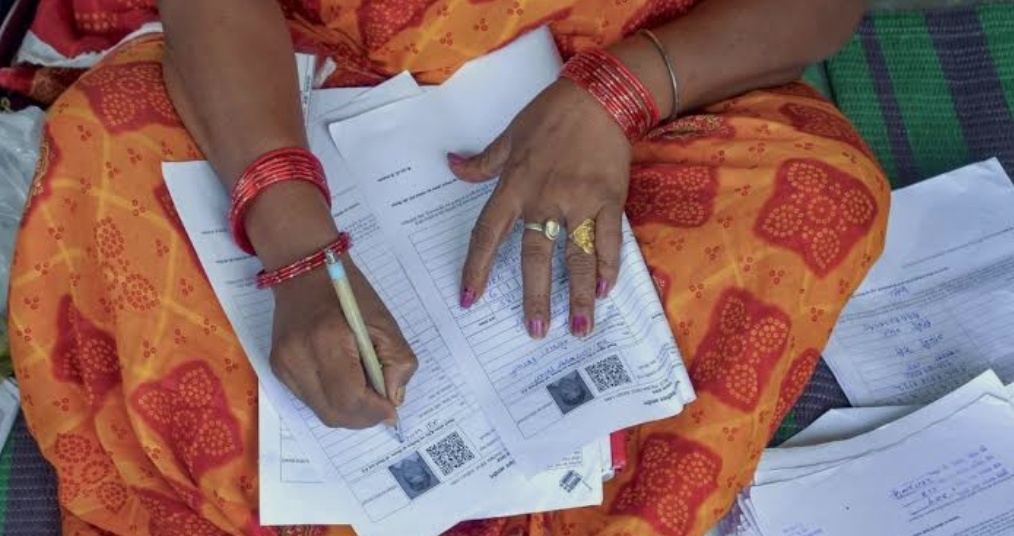
Ranchi, September 12: The ongoing Special Intensive Revision (SIR) of electoral rolls in Jharkhand has brought attention to cases involving married women whose voter records show differences in names or titles before and after marriage.In several cases, women who were recorded as “Kumari” in older electoral records have subsequently appeared as “Devi” in voter lists after marriage. Such changes, along with other differences in voter details, can result in the records being flagged for verification against the 2003 electoral roll.
Election officials and Booth Level Officers (BLOs) have asked voters facing such discrepancies to provide documents supporting their identity and electoral details. Where necessary, voters may also use the prescribed correction process, including Form 8, to update or rectify information in the electoral roll.
The issue has particularly affected women who shifted from their parental homes to their marital homes after marriage. Although their personal identity may remain unchanged, differences in names, addresses or other particulars can create inconsistencies when present-day records are compared with older electoral data.
One such case involves a woman from Pundag whose earlier voter records carried the title “Kumari”, while her later registration in Ranchi after marriage reflected “Devi”. She submitted documents to respond to the verification notice.The SIR exercise covers a large number of voters across the state.
According to officials cited in the report, more than 63 lakh voters have been identified for verification, with about 45.55 lakh falling under the category of “logical discrepancy”.
These discrepancies may involve differences in a voter’s name, parents’ names or date of birth, as well as cases where a person’s name appears at more than one location in electoral records.Jharkhand Chief Electoral Officer K Ravi Kumar said cases involving voters placed in the “no-map” or “logical discrepancy” categories are being examined at the Electoral Registration Officer (ERO) level.
Notices are being issued to obtain relevant documents, following which decisions will be taken after examining the evidence submitted by the voters.The Election Commission has set September 15 as the deadline for filing claims and objections.
Voters who receive notices are required to appear before the concerned authority and submit supporting documents within the prescribed process.Officials have indicated that a second notice may be issued if a voter does not respond to the first notice before the matter is considered for a decision.
The cases involving married women have highlighted the importance of carefully examining legitimate changes in electoral records so that genuine voters are not inconvenienced because of differences arising from marriage, relocation or corrections in personal details.
